Sharhorod
Jan Zamoyski
Bernardo Morando
fortification
Podillia
Murashka River
Kovbasna River
Ottoman period
cultural heritage
Overview of the Site
Sharhorod Castle is a historic defensive complex in Sharhorod, founded in the Late Renaissance period as a fortification center on the eastern frontier of the Polish–Lithuanian Commonwealth. For the modern tourist, this is not a “museum castle” in the full sense, but an authentic fragment of the old defensive landscape, where not only the preserved material remains are important, but also the very logic of the place itself.
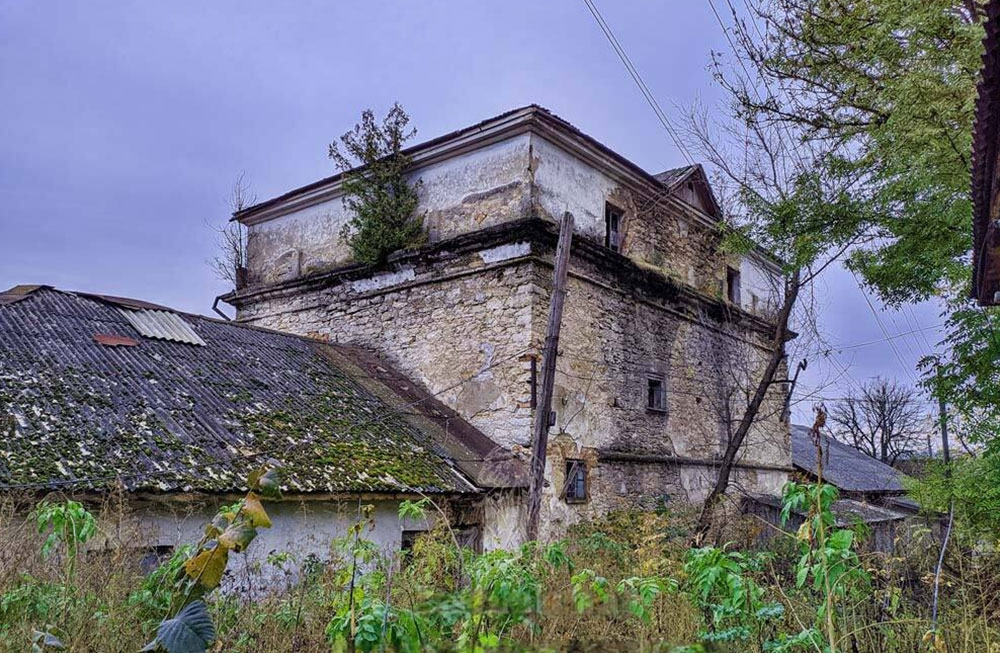
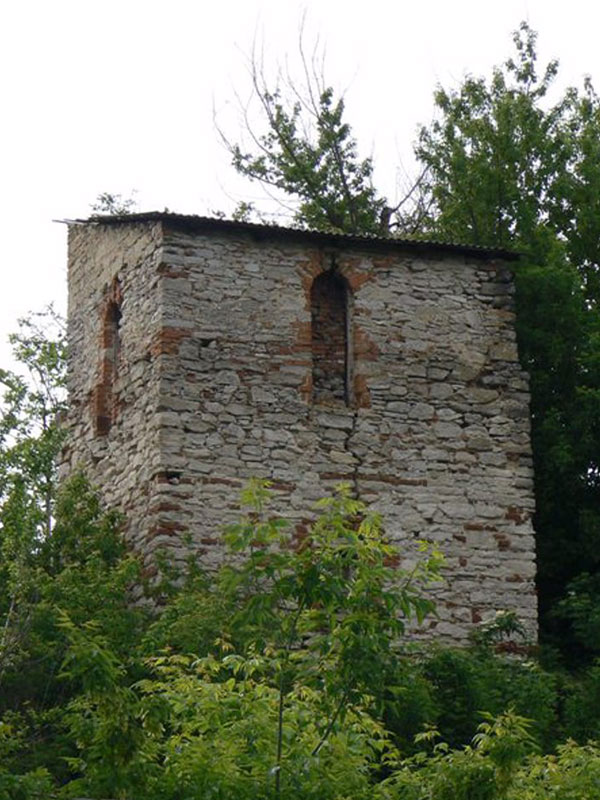
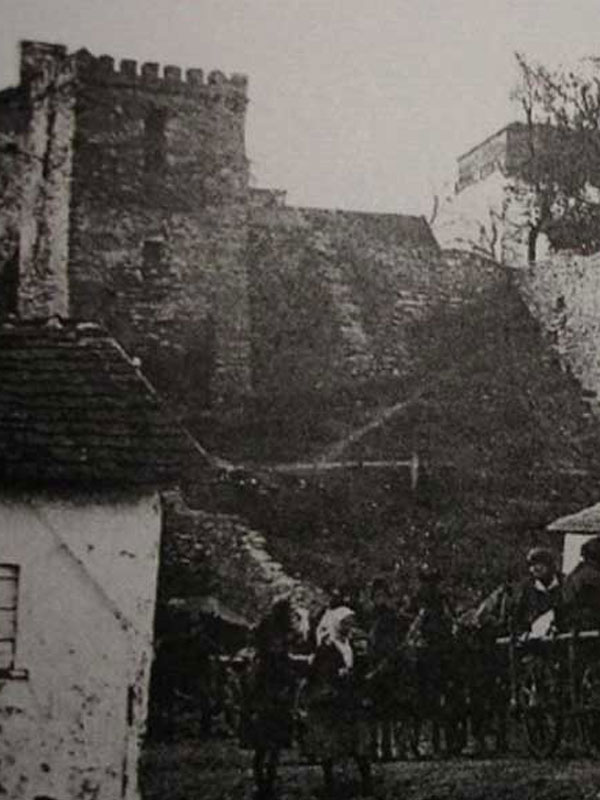
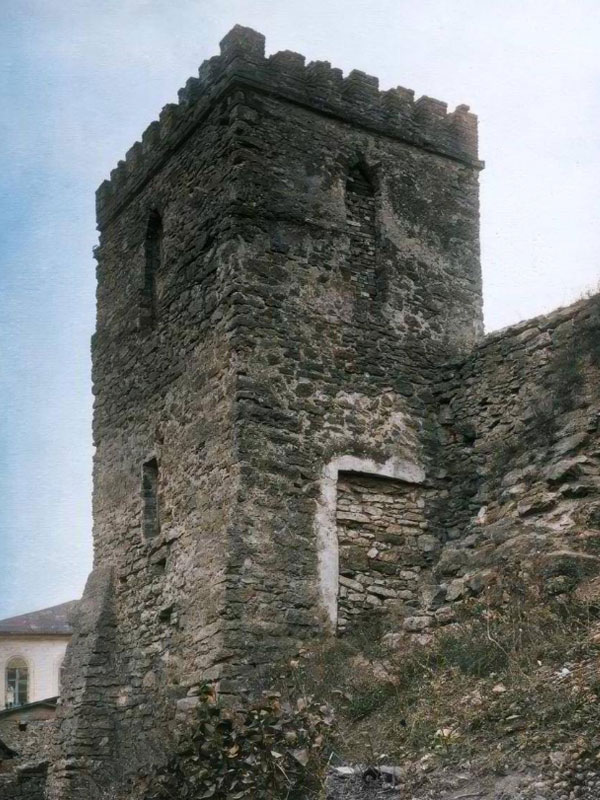
Walls, a tower, and a residential building within the castle have survived to the present day. These elements make it possible to identify the monument not as a conventional local ruin, but as an important fragment of the defensive history of Podillia in the 16th–17th centuries.
For a “green tourist,” Sharhorod Castle is attractive because of its intimate scale, the possibility of exploring it on foot, the combination of historical heritage with natural terrain, and its inclusion in a broader urban route without excessive transport load.
The site should be considered not in isolation, but within the system of historic Sharhorod: together with St. Florian Church, the synagogue, the monastery complex, and the town museum. In this connection, the castle functions as part of an integral cultural landscape.
Photos
History
Foundation and Original Function
Sharhorod was formed as a castle-town at the end of the 16th century. Its emergence is connected with the defensive policy of the Polish–Lithuanian Commonwealth on the Podillian frontier and with the activity of the Grand Chancellor of the Crown, Jan Zamoyski. In sources, the fortification plan is traditionally associated with the Italian architect Bernardo Morando.
The fortress was built on a high cape at the confluence of the Murashka and Kovbasna rivers. Such a location had not only symbolic but also practical significance: the rivers and slopes strengthened the defensive qualities of the fortification, while the castle controlled an important local space and trade communications.
Wars and Destruction
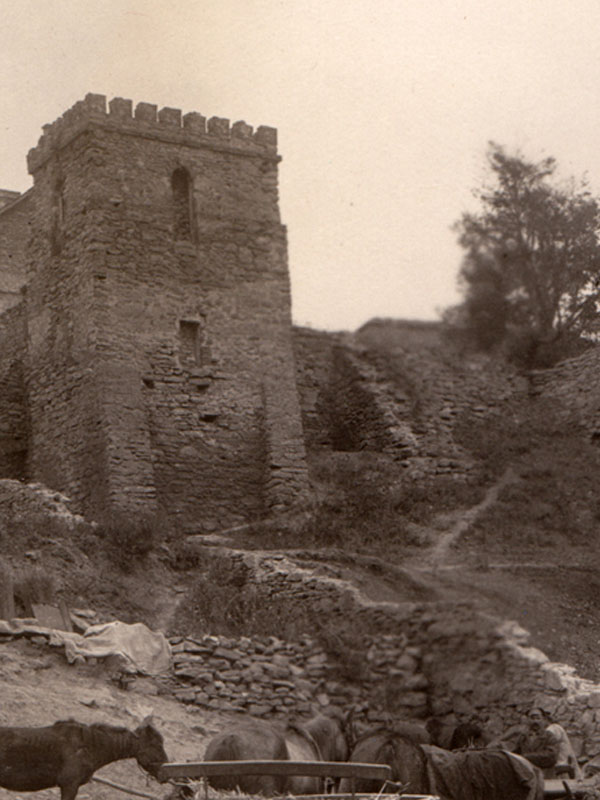
Throughout the 17th century, Sharhorod Castle repeatedly found itself in the zone of military conflicts. The town and the fortress survived attacks by Cossack and Tatar forces, and in descriptions from the middle of the 17th century the castle appears as a fortified center with towers and artillery.
After the Ottoman conquest of Podillia in 1672, Sharhorod became part of the sphere of Turkish rule, which lasted until 1699. This period is important for understanding the decline of the fortifications: their defensive significance remained, but the complex gradually lost its original integrity.
Later Reconstructions and State of Preservation
In the following centuries, the castle was not fully restored as a complete fortress. Instead, separate elements were used and rebuilt. That is why modern Sharhorod Castle is not a complete ensemble, but a fragmentarily preserved defensive complex with several key material testimonies to its past.
Today, the monument is important primarily as a historical document within the urban space. In the official registers of Vinnytsia region, the walls and tower of the castle, as well as the residential building in the castle, are listed separately, which emphasizes the value of each preserved component.
Architectural Features
Fortification Concept
Sharhorod Castle belonged to the Renaissance fortification tradition oriented toward artillery warfare. According to descriptions and iconographic evidence, the castle had a five-bastion or a similar defensive system, and in the middle of the 17th century it is mentioned as a citadel with five towers.
Preserved Elements
The most valuable material remains are fragments of the walls, a tower, and the castle house. These elements make it possible to trace the scale of the original structure, the thickness of the walls, the logic of defense, and the adaptation of the complex to the terrain.
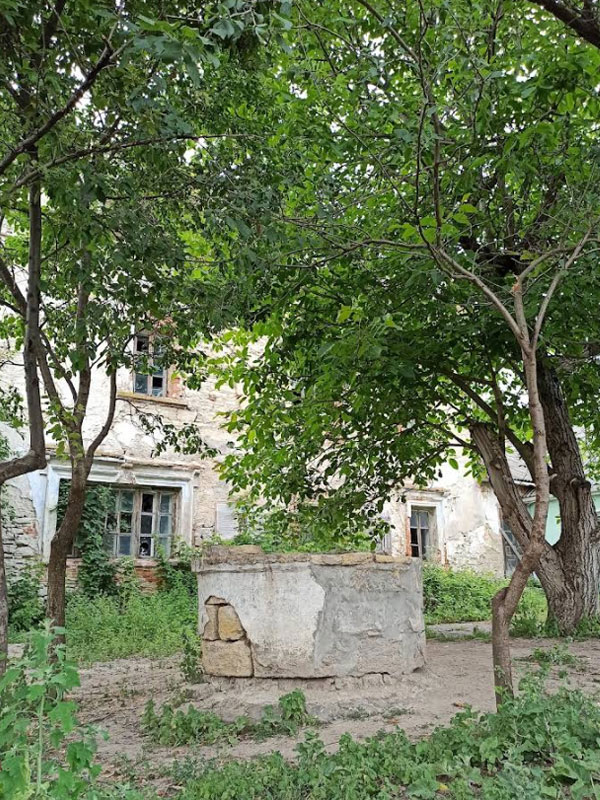
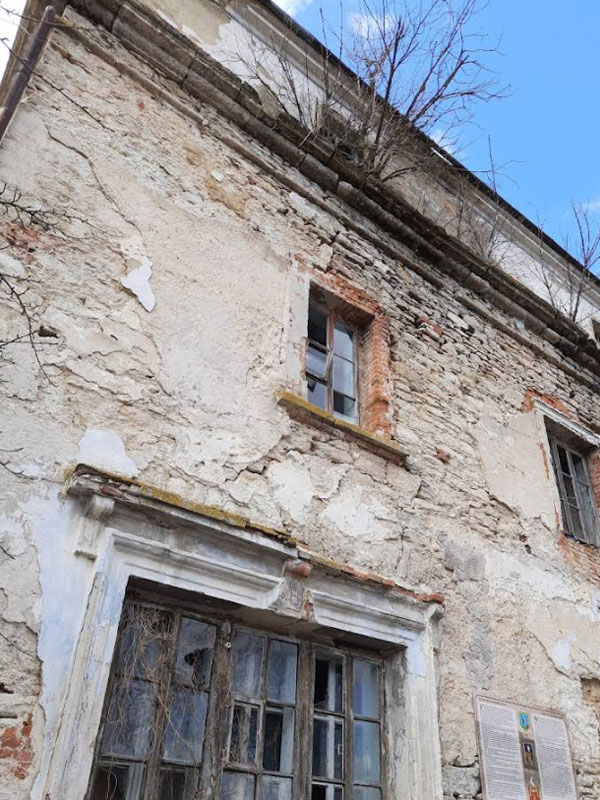
Particular attention should be paid to the residential building within the castle. It represents a combination of defensive and residential functions and is an important argument in favor of the idea that Sharhorod Castle was not only a fortress, but also an administrative and residential center.
Architectural Style
The complex is characterized by features of late Renaissance defensive architecture with later layers. It is not a decorative palace-type site, but a fortification in which aesthetics are subordinate to function: observation of the territory, restraint of attacks, and control of the approaches to the town.
Restoration and Heritage Protection
For Sharhorod Castle, the urgent issue is not a stylized “restoration in an old style,” but the professional preservation of the authentic historical fabric of the monument. In the public space of the community, the monument consistently appears as one of the key sites requiring attention in the field of cultural heritage protection.
Natural Surroundings
The River Cape as Natural Defense
The main natural feature of the site is its location on a cape between the Murashka and Kovbasna rivers. For a historical fortification, this was a strategic choice: water, slopes, and natural differences in relief strengthened the defense and formed the visual dominance of the castle in the urban space.
Landscape Perception for Tourists
For the modern traveler, the natural surroundings of Sharhorod Castle are not a regular estate-style park, but a small-scale Podillian landscape. This is exactly what provides the “green” perception of the site: a calm pace of exploration, proximity to watercourses, expressive terrain, and the possibility of combining history with a walk without complicated logistics.
Ecological Potential of the Route
The site fits well into the format of a short walking tour or a local weekend route. This is important for a green tourist: Sharhorod Castle functions not as a mass attraction, but as part of a quiet cultural environment with a moderate anthropogenic load.
Tourist Infrastructure
What Is on the Site and Nearby
The castle itself has survived only fragmentarily, so its main tourist value is formed in connection with other landmarks of Sharhorod. Official community materials and news about excursion routes confirm that the castle is included in the town’s walking historical routes.
Sites for Combined Visits
The most logical approach is to combine a visit to the castle with St. Florian Church, the Sharhorod Synagogue, the complex of St. Nicholas Monastery, and the Sharhorod Museum of Fine Arts. Such a combination gives the tourist a complete picture of the multi-confessional and multicultural past of the town.
Who the Site Suits Best
The site is best suited for independent travelers, small excursion groups, admirers of Podillia’s history, photographers, and tourists who prefer unhurried routes with a high concentration of meanings within a small area.
Practical Evaluation for Green Tourism
Sharhorod Castle should not be positioned as a site with developed service infrastructure directly within the fortress itself. Its strength lies elsewhere: accessibility within the town, the compactness of the route, and the combination of nature, history, and local cultural heritage.
Expert Analysis
Sharhorod Castle is valuable not because of the scale of its preservation, but because of the quality of its historical context. It is a representative example of a Podillian frontier fortification, where the natural relief, the military logic of the Late Renaissance, and later historical transformations can still be read even in fragments. For analytical tourist content, the site is important as a bearer of the history of space, and not merely as a photogenic ruin.
From the point of view of modern tourist strategy, Sharhorod Castle works best in a cluster with the town’s other landmarks. It is precisely in a complex presentation — the castle, sacred architecture, museum, and urban landscape — that a strong route for cultural and green tourism emerges. Therefore, the main emphasis in communication should be placed not on the “separate castle,” but on historic Sharhorod as an integral heritage environment.
Comparative Table with Other Estates of the Region
| Site | Type | Period | State of Preservation | Natural Surroundings | Visiting Format | Value for a Green Tourist |
|---|---|---|---|---|---|---|
| Sharhorod Castle | Fortification complex | 16th–17th c. | Fragments of walls, tower, castle house | A cape between the Murashka and Kovbasna rivers, historic urban landscape | Walking tour within the town | High, if combined with other landmarks of Sharhorod |
| Witosławski-Lwów Palace in Cherniatyn | Palace-and-estate site | Late 18th c. | Preserved palace | Palace-and-park environment | Calm exploration of the estate ensemble | High for those seeking landscape and palace aesthetics |
| Fortress in Bar | Fortification site | 16th c. | Historically significant, but only fragmentarily legible in space | Urban environment | Combined with a tour of the town | Medium, more for historical tourism than for an intimate green route |
| Defensive fortress in Busha | Defensive archaeological and historical complex | 5th–17th c. | Historic territory with a strong memorial meaning | Powerful natural surroundings, expressive landscape | Weekend route | Very high for combining nature and history |
Compared with classical palace-and-park ensembles, Sharhorod Castle is less decorative, but stronger as a source of historical authenticity. Its competitive advantage lies in its local scale, river relief, and the possibility of exploring the monument in the context of a living historic town.
FAQ
Where is Sharhorod Castle located?
The site is located in the town of Sharhorod in Vinnytsia region, on a river cape between the Murashka and Kovbasna rivers, within the historic environment of the town.
Who founded Sharhorod Castle?
The castle is associated with Jan Zamoyski. The planning of the fortifications in local historical tradition is associated with the architect Bernardo Morando.
What has survived from the complex?
Fragments of walls, a tower, and a residential building within the castle have survived to the present day, and this building is an important component of the historic ensemble.
Why is the castle especially interesting for a green tourist?
The location combines a historic monument with a compact Podillian landscape, a walking-route format, and proximity to other cultural heritage sites.
Is there a park here in the classical estate sense?
No. The key role is played by the natural defensive relief, rather than a regular park or a palace-and-park composition.
How much time should be planned for a visit?
A short visit is enough for the site itself, but together with the accompanying landmarks of Sharhorod, the route should be planned for at least several hours.
Which locations should be combined with a visit?
The best combination is St. Florian Church, the synagogue, St. Nicholas Monastery, and the town museum of fine arts.
Sources
- Institute of History of Ukraine, National Academy of Sciences of Ukraine — “Sharhorod”
- Vinnytsia Regional Military Administration — list of cultural heritage monuments of national significance
- Sharhorod Community — “The Picturesque Town of Sharhorod”
- Sharhorod Community — “Through the Historic Places of Sharhorod Region”
- Sharhorod Region in Podillia — “Local History of Sharhorod Region”
- Sharhorod Region in Podillia — “History of Sharhorod. Part 1”
- Landmarks.in.ua — Sharhorod, castle walls and tower
- Castles and Temples of Ukraine — Sharhorod
- Museum Portal — Sharhorod Museum of Fine Arts
Video overview
Location on the map