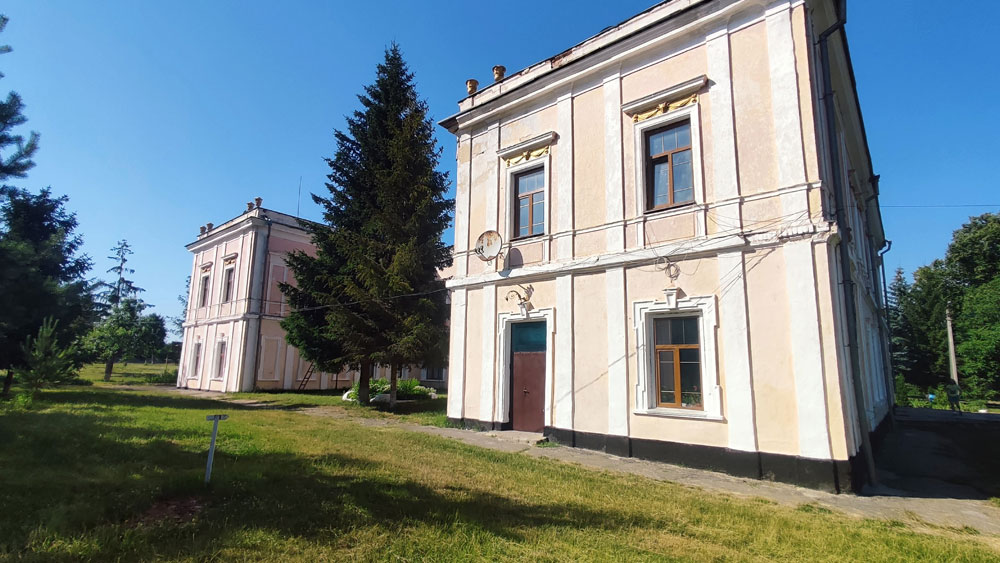
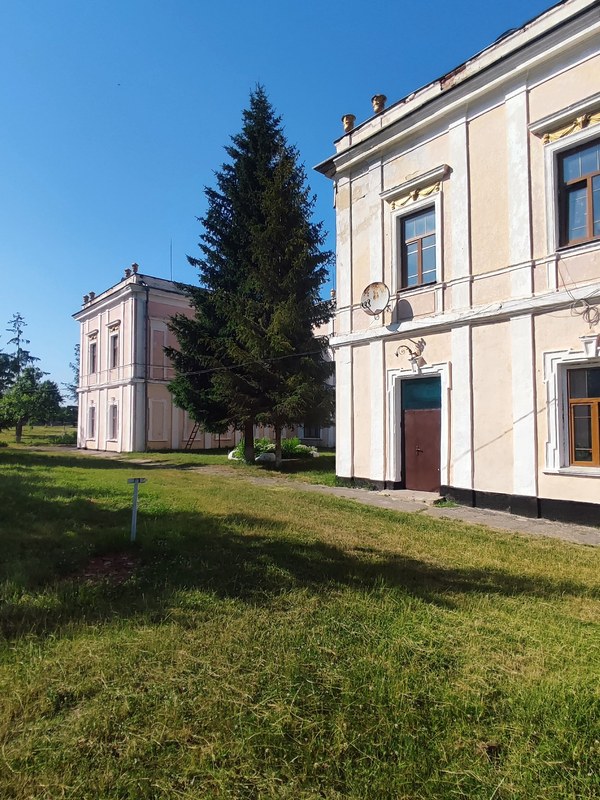
The M. Ye. Tsenina Estate in the village of Kotyuzhany is one of the most striking manor landmarks in Mohyliv-Podilskyi district of Vinnytsia region. A two-storey Neo-Renaissance palace surrounded by the landscape park “Victoria” forms a cohesive cultural and landscape ensemble above the Liadova River.
For travellers, it is a stop where history, architecture and green tourism meet: you can see early 20th-century decorative work, walk through the park and combine the visit with a Podillia route — from Sharhorod to other estates and castles across the region.
This guide for Podilski Mandry is based on verified local history sources; check practical access information before your trip.
Kotyuzhany village
manor house
Neo-Renaissance
Victoria Park
cultural heritage
green tourism
Vinnytsia region
Mohyliv-Podilskyi district
weekend trip
Quick answer
- Where: Kotyuzhany village, Murovanokurylovetska hromada, Mohyliv-Podilskyi district, Vinnytsia region; above the Liadova River.
- What it is: a nationally significant early 20th-century manor (palace) in Neo-Renaissance style, designed by architect Oscar Muntz; the “Victoria” landscape park.
- How to get there: easiest by car — via Murovani Kurylivtsi or as part of a Sharhorod — Kotyuzhany route; landmark — Kotyuzhany Educational and Rehabilitation Centre.
- Time needed: 1–1.5 hours for the facade, park and photo stops; longer if combined with other sights in the district.
- Best for: lovers of architecture, manor history, photo travel and green-tourism routes across Podillia.
- District: Mohyliv-Podilskyi district — a hub for Vinnytsia region routes.
Overview
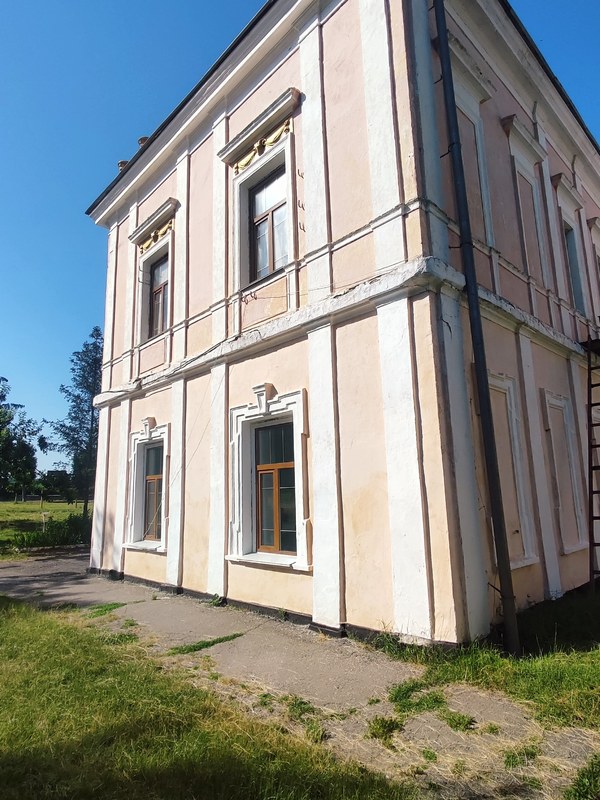
The M. Ye. Tsenina Estate was the former property of retired General Ivan Dmytrovych Tsenin, rebuilt at the start of the 20th century after the fire of 1910. The present two-storey building retains characteristic Neo-Renaissance decor: pilasters, window surrounds, bas-reliefs and ornamental facade details.
The complex stands in the landscape park “Victoria”, a locally protected natural reserve. The ensemble is notable for combining architecture, park landscape and the history of the Podillia region.
Allow about one hour for a visit. The estate fits well into a one-day Mohyliv-Podilskyi district route together with Sharhorod, Murafa or other Vinnytsia landmarks.
Photos
History
Origins
From the late 19th century, a one-storey house stood on the site of today’s estate in Kotyuzhany, built by the previous owners, the Dzierzhek family (1885). At the beginning of the 20th century the property was purchased by retired General Ivan Dmytrovych Tsenin.
Owners and historical context
In 1910, during peasant unrest, the manor was burned down. In 1912 the general’s widow, Yevheniia Mykolaivna Tsenina, rebuilt the palace to a design by architect Oscar Muntz. The new building became two-storey, based on the plan of the earlier house, in Neo-Renaissance style.
Later fate and present condition
During the Soviet period the building served various institutions. Today the palace houses the municipal Kotyuzhany Educational and Rehabilitation Centre. The monument has national heritage status. The facade retains decorative ornament, but needs care: signs of age and exposed masonry are visible on the walls.
Architectural features
Layout and composition
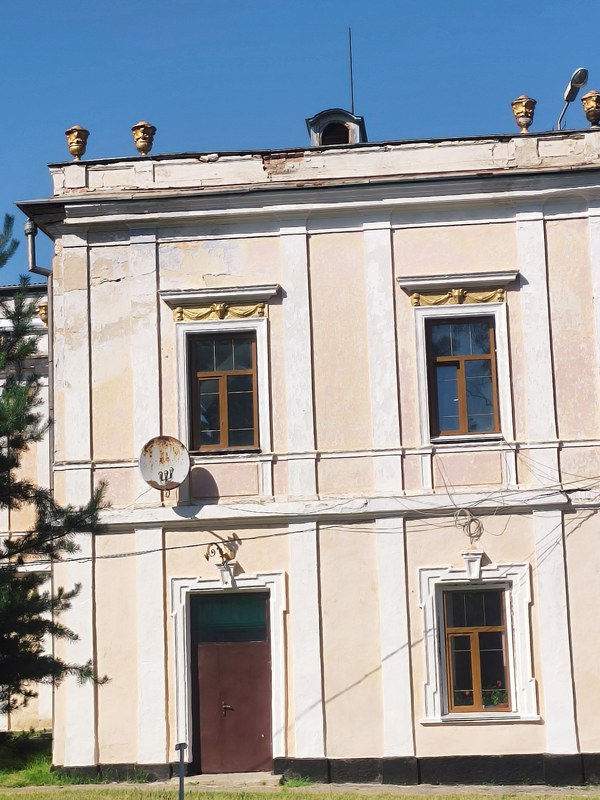
The main house is a two-storey brick building with symmetrical facades divided by pilasters and horizontal cornices. The composition emphasises the representational character of the estate and its link with the landscape park.
Stylistic traits
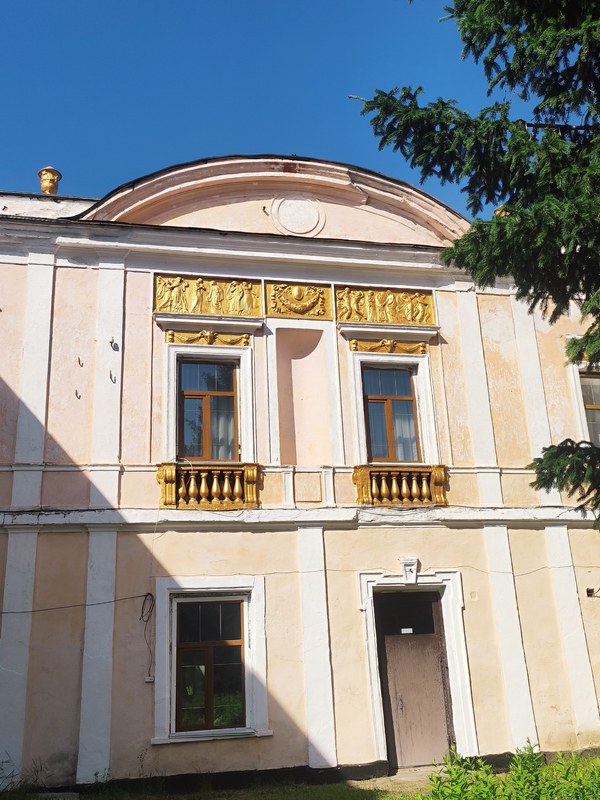
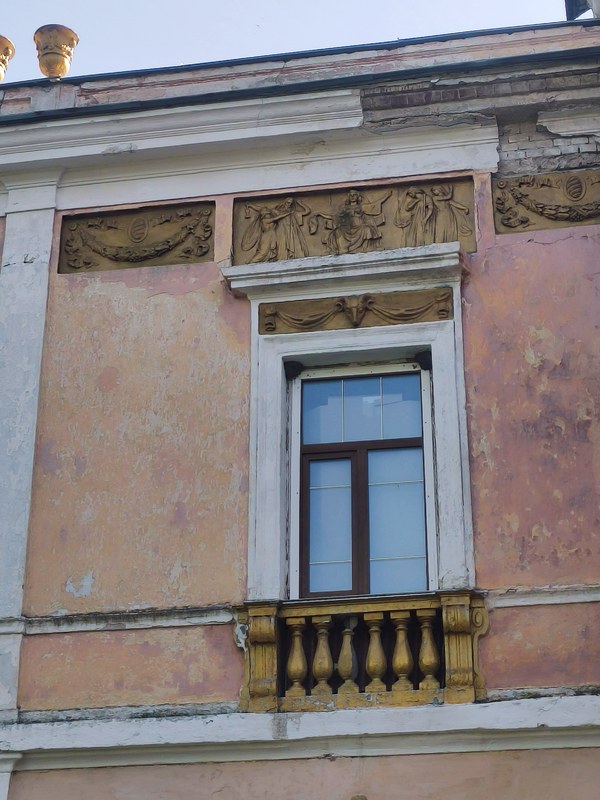
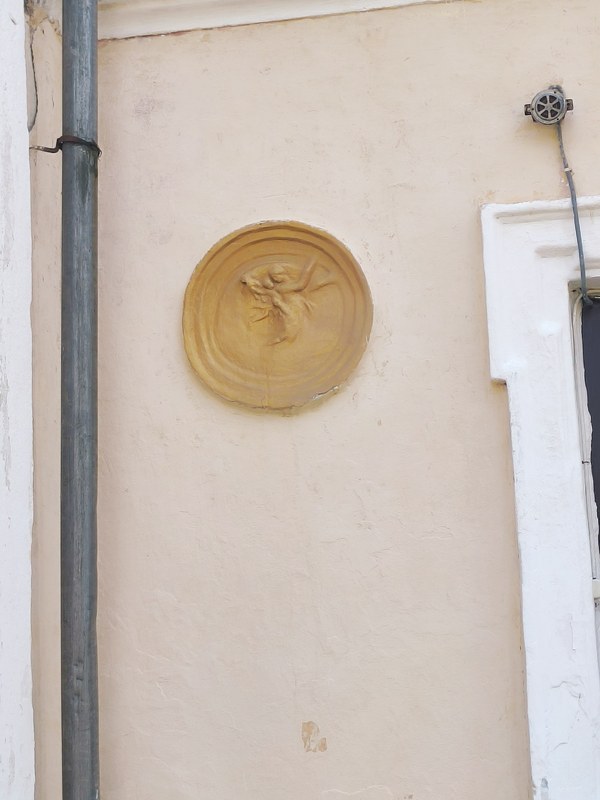
The architecture belongs to Neo-Renaissance: pink-and-white facade colours, window surrounds, golden bas-reliefs with classical motifs, decorative balustrades below windows, medallions and urns on the parapet. The project author is St Petersburg architect Oscar Muntz.
State of preservation
The ensemble is largely preserved, but plaster and stucco work need restoration. Some facade sections show damaged render and exposed brickwork. Window decor and bas-reliefs remain a defining feature of the monument.
Natural setting
Park and landscape
The estate stands in the landscape park “Victoria”, covering about 11 hectares — a locally significant garden and park art monument (since 1995). The park lies on rolling terrain above the Liadova River and includes alleys, lawns and partly preserved landscape design elements.
Appeal for walks and photography
The park and manor facade offer strong images in any season: in summer — greenery against the pink-and-white facade; in autumn — rich foliage colours. Vertical angles convey the scale of the building and window details well.
Role in green tourism
The location fits Vinnytsia green-tourism routes: a mix of historic architecture, parkland and rural Podillia landscape without heavy tourist crowds.
Visitor information
How to get there
Car is the most convenient option. Kotyuzhany is in Mohyliv-Podilskyi district; landmark — Kotyuzhany Educational and Rehabilitation Centre (12 Chervonoarmiiska Street). From Murovani Kurylivtsi or Sharhorod — regional roads within a one-day route.
Before you visit
The building is in active use as an educational and rehabilitation centre. Exterior views and the park are usually accessible from public approaches, but access to interiors should be confirmed on site or by phone. Comfortable shoes for walking in the park are essential.
Current status and accessibility
During wartime, check current safety guidance for the region, possible travel restrictions and the centre’s opening hours before travelling. The facade condition shows a need for restoration — take care near damaged wall sections.
Combining with other Vinnytsia sights
A logical continuation is Sharhorod (castle, synagogue) and other estates and castles of Mohyliv-Podilskyi district. Plan it as part of a day loop: Sharhorod — Kotyuzhany — Murovani Kurylivtsi.
What to see nearby
- Sharhorod Castle — a fortification landmark and a key Podillia route stop, ~15 km from Kotyuzhany.
- Great Defensive Synagogue in Sharhorod — a unique architectural dominant of the town, a natural pair with a manor route.
- Mohyliv-Podilskyi district — hub of other landmarks, routes and locations for trip planning.
- Murovani Kurylivtsi — the hromada centre and a convenient starting point for a route to Kotyuzhany.
- Victoria Park — if not fully explored during the estate visit, allow separate time for a walk along the alleys.
Expert view
The M. Ye. Tsenina Estate stands out among many Podillia manors for combining Neo-Renaissance decor with an intact park ensemble. Facade bas-reliefs, balustrades and medallions are a rare example of representative 1910s architecture in Vinnytsia region, not merely a rural manor.
For a cultural route it is a strong photo stop and slow-travel point: not overwhelmed by mass tourism, yet with a clear historical identity. Together with Sharhorod and Victoria Park it forms a full one-day green-tourism route in Mohyliv-Podillia.
Comparison with other Vinnytsia landmarks
| Site | Settlement / hromada | Type | Historical period | Architectural impact | Natural setting | Preservation | Value for a Vinnytsia route |
|---|---|---|---|---|---|---|---|
| M. Ye. Tsenina Estate | Kotyuzhany, Murovanokurylovetska hromada | Manor / palace | 1912, Neo-Renaissance | High: bas-reliefs, balustrades, medallions | Victoria Park, Liadova River | Preserved, facade needs restoration | High for Mohyliv-Podillia routes |
| Potocki Palace | Tulchyn | Palace | 19th c., Classicism | Very high, museum site | Park, town centre | Restored, museum | High, Tulchyn district hub |
| Sharhorod Castle | Sharhorod | Castle | 16th–17th c. | High, fortification | Urban landscape, ramparts | Partly preserved | High, logical neighbouring stop |
| Hlivatsky Palace | Budne, Zhmerynka district | Palace / manor | 19th c. | High, historic park | Park, green tourism | Ruinous / partly preserved | Medium, for Zhmerynka district routes |
FAQ
Where is the M. Ye. Tsenina Estate located?
In Kotyuzhany village, Murovanokurylovetska hromada, Mohyliv-Podilskyi district, Vinnytsia region, in the landscape park “Victoria” above the Liadova River.
Why is the estate worth visiting?
It is a nationally significant early 20th-century Neo-Renaissance monument with expressive facade decor and a park — a convenient stop on a Podillia route.
When is the best time to visit?
Spring and summer for park walks; a sunny day gives the best light for facade photos. Check weather and current access before travelling.
How much time do you need?
Usually 1–1.5 hours for the facade, park and photo stops. With other district sights — half a day or a full day.
Can it be combined with other Vinnytsia sights?
Yes. Most logically with Sharhorod (castle, synagogue), Murovani Kurylivtsi and other sites in Mohyliv-Podilskyi district.
Is it worth a dedicated trip?
Yes if you are interested in Podillia manor architecture and green tourism. As a standalone destination it works best as part of a 2–3 site district route.
Sources
Video tour
Location on the map