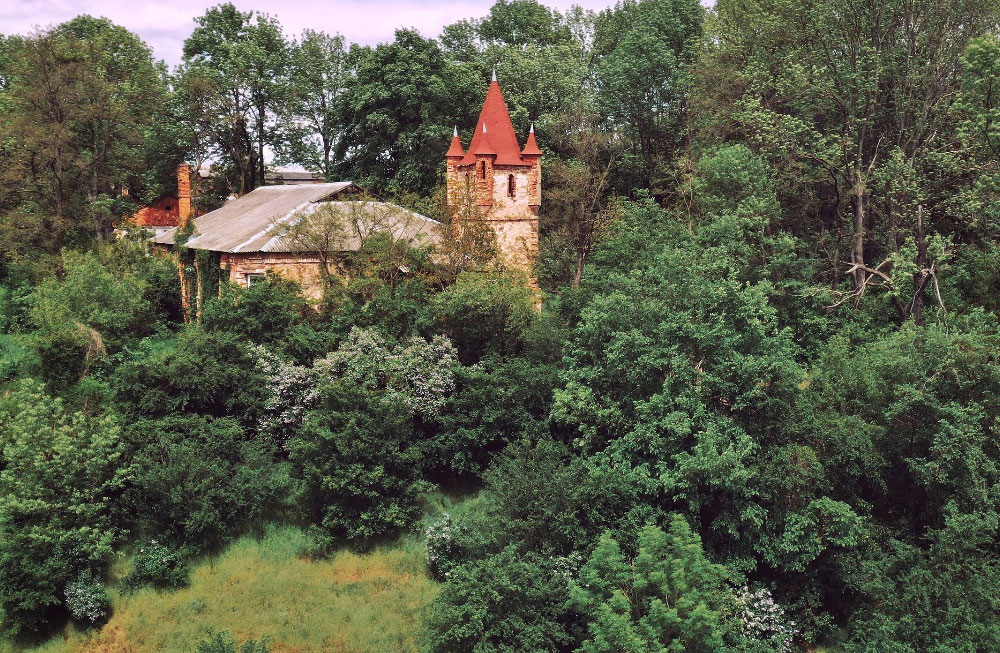
Count Heyden Estate (Ukrainian: Садиба графа Гейдена) in Sutysky is one of the most atmospheric historic estate sites on the Southern Bug in Vinnytsia region. The main palace has not survived, yet the place still preserves a readable ensemble of neo-Gothic fragments, estate gates, service buildings and part of the historic park on a granite riverside elevation.
For travellers, this is not a polished museum stop but a landscape-and-history location. It works especially well for slow travel, regional heritage routes and short detours from Vinnytsia, Tyvriv or other nearby destinations connected with manor architecture and riverside scenery.
The site is most rewarding for visitors who appreciate partial preservation, layered history and the contrast between a former aristocratic residence and its later reuse. In a Vinnytsia-region itinerary, it functions best as a thoughtful stop rather than an all-day attraction.
Sutysky
manor remains
Neo-Gothic
Southern Bug
historic park
cultural heritage
Vinnytsia region
weekend route
slow travel
Object overview
Count Heyden Estate is a late-19th-century manor complex on the outskirts of Sutysky, above the granite banks of the Southern Bug. The estate is primarily valuable today for what still remains visible: the neo-Gothic character of the surviving structures, the entrance composition, fragments of the service ensemble and the historic landscape setting.
This location is most suitable for travellers interested in local history, abandoned or partially preserved estates, architecture, photography and calm regional routes beyond the best-known palace destinations of Vinnytsia region.
For a short stop, 30 to 45 minutes is usually enough. If you want to walk more slowly, observe the terrain and combine the site with nearby regional stops, allow about an hour. Yes, it is worth including in a weekend route around Vinnytsia region, especially if you are building an itinerary around manor heritage and the Southern Bug landscape.
Photos
History
Origin of the site
The estate took shape in the late 19th century, and some local descriptions place the ensemble at the turn of the 20th century. It was established on a striking riverside site above the Southern Bug, where architecture and landscape were designed to work together rather than exist as separate elements.
Owners and historical context
The property is associated with Count Dmytro Fyodorovych Heyden, a retired colonel from a Dutch-origin military family. Local historical sources also connect him with wider хозяйський and infrastructure activity in the area, including brewing and regional economic development, which helps explain why the estate is remembered not only as a private residence but also as part of the wider social history of the district.
Later fate and present-day condition
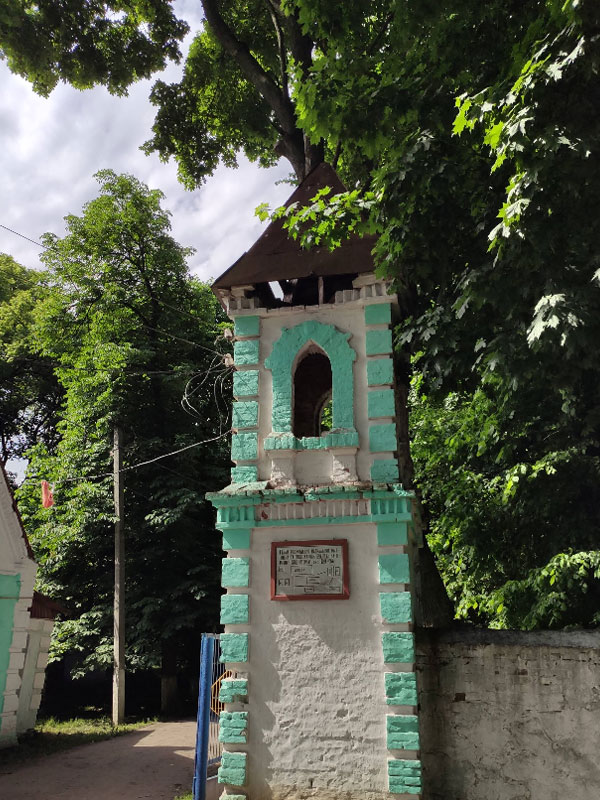
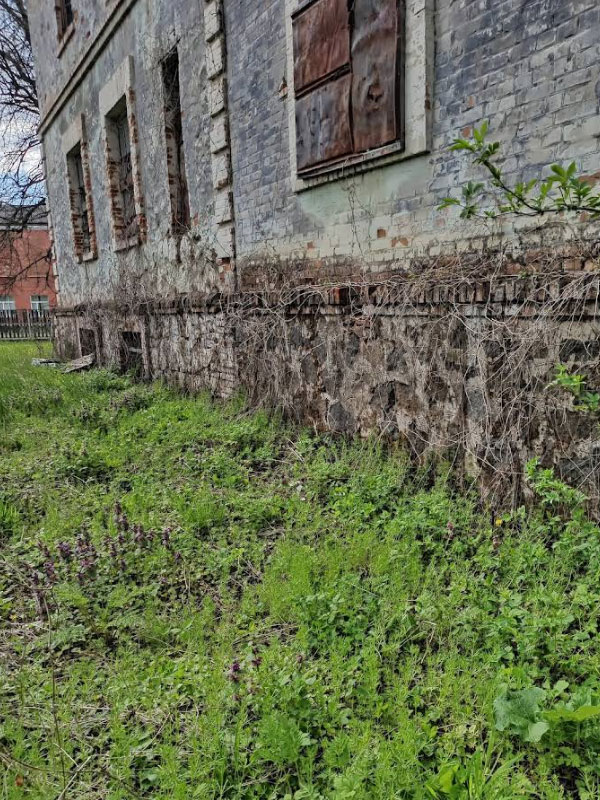
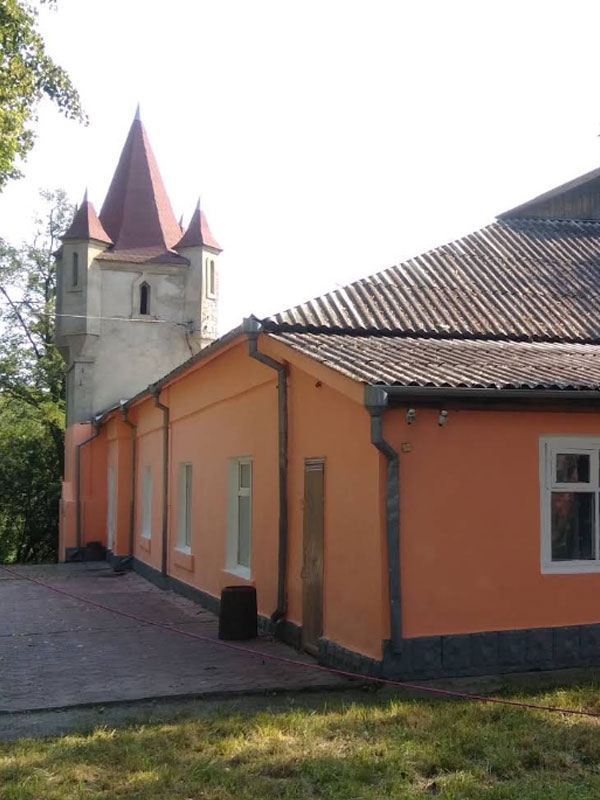
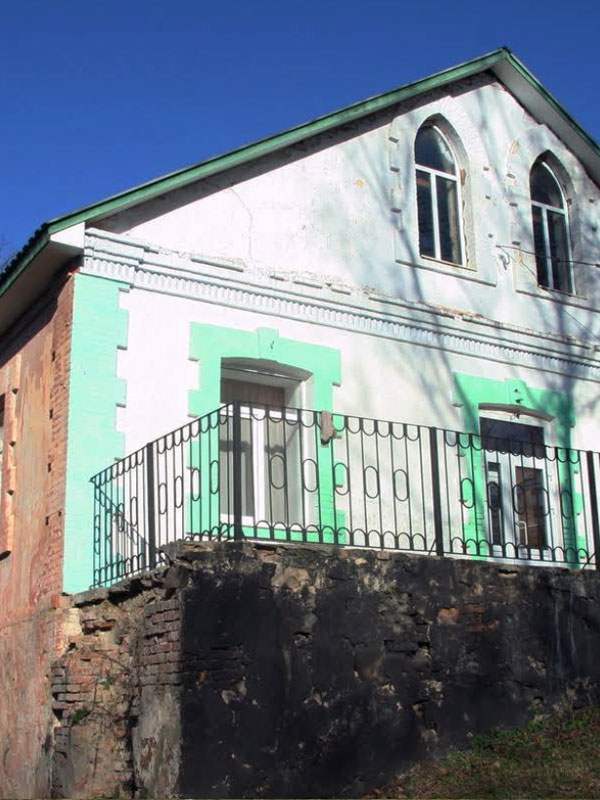
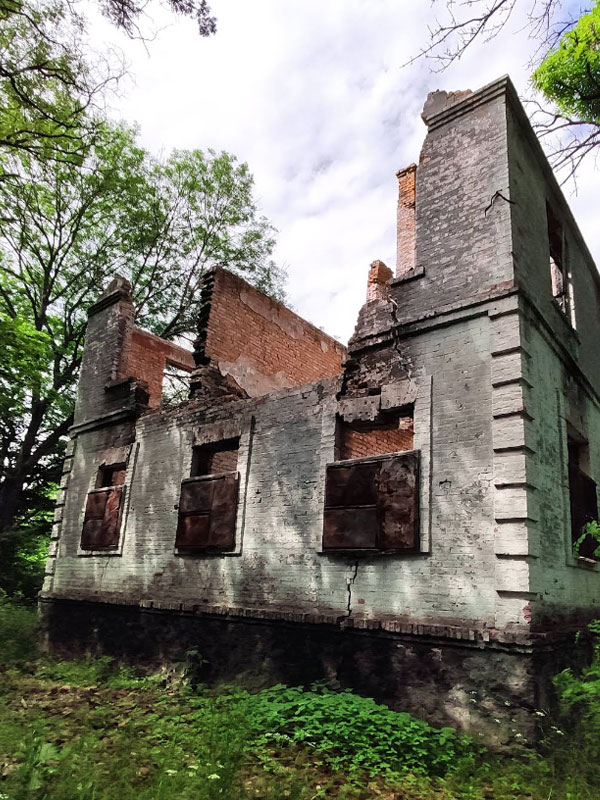
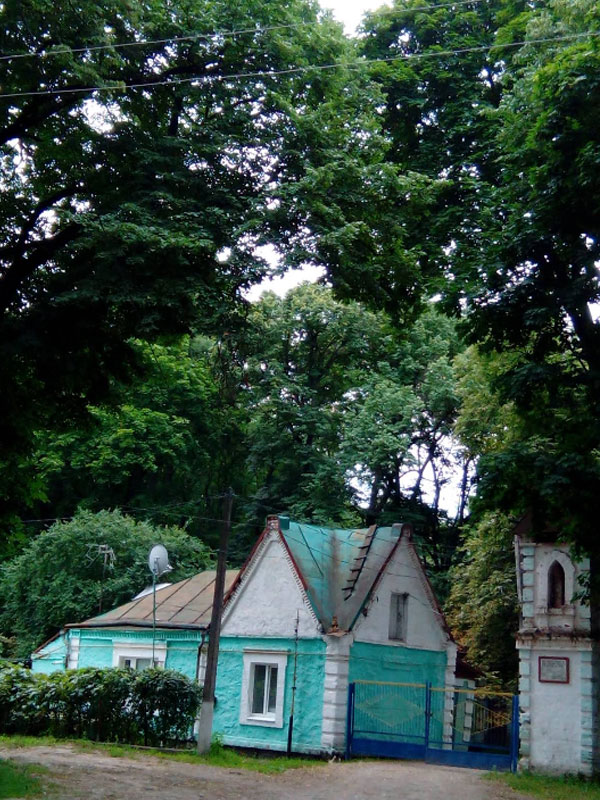
After the Second World War, the estate territory was reused for a boarding-school function. The main palace did not survive. What remains today are fragments of the former complex: neo-Gothic wings, a stylized gate and watchtower composition, service buildings and part of the park. Because of that loss, the site should be understood as a historically legible ensemble in fragments, not as a fully preserved palace residence.
Architectural features
Layout and composition
The original manor ensemble included the main residence, wings, entrance structures, service buildings and a landscaped park. Its position on a granite bluff gave the estate a scenic and representational character. Even in its reduced state, the site still communicates the logic of a manor placed to dominate both approach views and the river landscape.
Stylistic features
The estate is associated with neo-Gothic design. The surviving wing with a tall tower and the entrance elements stylized as a watchtower are the clearest markers of that language. This is the main reason the site stands out visually among more classical palace-and-park complexes in the region.
State of preservation
The condition is fragmentary. The palace has been lost, and the remaining structures do not present a complete ceremonial composition anymore. Even so, the preserved elements are strong enough to read the former character of the estate and to justify a heritage-focused stop.
Natural surroundings
Park and landscape
The estate stands on the granite banks of the Southern Bug, and its historic park was laid out with that terrain in mind. The riverside relief, rock outcrops and tree cover remain essential to the experience of the place.
Appeal for walks and photography
This is a highly photogenic location, but not because of polished restoration. Its appeal comes from contrast: vertical neo-Gothic fragments against a softer park environment, old masonry against granite and vegetation, and long views toward the river valley. For photographers, the site works especially well in soft morning or late-afternoon light.
Value for green travel
The estate is well suited to travellers who prefer quiet, low-intensity routes built around scenery, short walks and cultural context. It is less about entertainment infrastructure and more about atmosphere, observation and regional landscape identity.
Tourist infrastructure
How to get there
The most practical way to reach the site is by road from Vinnytsia through the Tyvriv direction. Sutysky itself is a known local stop in Vinnytsia district, and the estate lies on the outskirts of the settlement on the Tyvriv side, above the Southern Bug.
What to know before visiting
This is not a museum-format palace with a fully restored visitor circuit. The strongest experience here comes from reading the surviving fragments, the terrain and the historical context. It is sensible to verify local access conditions before planning a dedicated stop, because the territory reflects long-term institutional reuse rather than a purpose-built tourism model.
How to combine it with other Vinnytsia-region sites
The estate works well in a wider thematic route with the Grokholsky-Mozhaysky Palace in Voronovytsia, the Shcherbatova Palace in Nemyriv, the Potocki-Swieykowski estate remains in Pechera, or the neo-Gothic palace ensemble in Chernyatyn. Such a route gives a stronger sense of how different manor traditions developed across Podillia.
Expert analysis
Count Heyden Estate is strongest not as a restored showpiece but as a landscape-shaped memory site. Its value lies in the combination of neo-Gothic remnants, a dramatic Southern Bug setting and the ability to read several historical layers at once: noble residence, park composition, loss of the palace and later institutional adaptation.
Within Vinnytsia region, the location stands out as a very good slow-travel and photo stop. It is less monumental than Nemyriv and less formally preserved than Voronovytsia, yet it offers something those places do not: a more fragile, atmospheric encounter with estate heritage on a granite river bluff. For cultural routes focused on mood, landscape and ruin value, it is a meaningful inclusion.
Comparative table with other locations in Vinnytsia region
| Object | Settlement / community | Type of location | Historical period | Architectural expression | Natural surroundings | State of preservation | Tourism value for a Vinnytsia-region route |
|---|---|---|---|---|---|---|---|
| Count Heyden Estate | Sutysky | Estate remains | Late 19th century to turn of the 20th century | Neo-Gothic fragments | Granite banks of the Southern Bug, historic park remains | Fragmentary; palace lost, several estate elements survive | Strong for slow travel, photography and heritage detours |
| Grokholsky-Mozhaysky Palace | Voronovytsia | Palace and museum | 1770–1777 | Early classicism with Palladian features | Historic park setting | Well preserved, adapted to museum use | One of the clearest full palace stops near Vinnytsia |
| Princess Shcherbatova Palace | Nemyriv | Palace and estate | 1885–1917 | Neoclassicism | Large palace park | Substantially preserved | High-value destination for a dedicated heritage visit |
| Potocki-Swieykowski estate remains | Pechera | Estate park and mausoleum complex | Layered history from the 17th century to the early 20th century | The palace is lost; the mausoleum and park dominate the experience | Southern Bug riverside landscape | Partial preservation | Strong combined stop for nature, memory and funerary architecture |
| Chernyatyn Palace | Chernyatyn | Palace and park ensemble | First half of the 19th century with later reworking | Neo-Gothic core with later eclectic additions | Historic park territory | Preserved, adapted for educational use | Very good comparison point for neo-Gothic manor architecture |
FAQ
Where is Count Heyden Estate located?
The estate is located in Sutysky, Vinnytsia region, on the outskirts of the settlement above the Southern Bug.
What survives of the estate today?
The main palace has not survived. Visitors can still see neo-Gothic wings, entrance structures, some service buildings and part of the historic park.
When is the best time to visit?
Spring, early summer and autumn are usually the most rewarding seasons because the park setting and river landscape are easier to appreciate in mild weather and soft light.
How much time should I plan for the stop?
For a short visit, 30 to 45 minutes is usually enough. Allow up to an hour if you want a slower walk and more time for photos.
Is the site good for photography?
Yes. The combination of neo-Gothic fragments, old masonry, trees, granite terrain and river views makes it one of the more atmospheric photo stops in the area.
Can it be combined with other destinations in Vinnytsia region?
Yes. It pairs especially well with Voronovytsia, Nemyriv, Pechera and Chernyatyn if you are building a route around palace, estate and park heritage.
Is it worth a dedicated trip?
It is worth a dedicated trip mainly for travellers who enjoy manor ruins, regional history and landscape-driven routes. For most visitors, it works best as part of a wider itinerary.
Sources
- Vinnytsia Regional Military Administration: survey of tourist objects in Tyvriv district
- 20 хвилин Вінниця: history of Count Heyden Estate in Sutysky
- Travels in Ukraine: Count Hayden Manor, Sutysky
- Про Україну: Садиба графа Гейдена, Сутиски
- Travels in Ukraine: Grokholsky-Mozhaysky Palace, Voronovytsia
- Travels in Ukraine: Princess Shcherbatova Palace, Nemyriv
- 20 хвилин Вінниця: Potocki-Swieykowski estate remains in Pechera
- 20 хвилин Вінниця: Chernyatyn Palace and park ensemble
Video review
Location on the map