
A weekend tour through Podillia that brings together old railway stations, museum spaces, castle and palace heritage, sacred sites, pilgrimage locations, and a powerful urban finale in Vinnytsia.
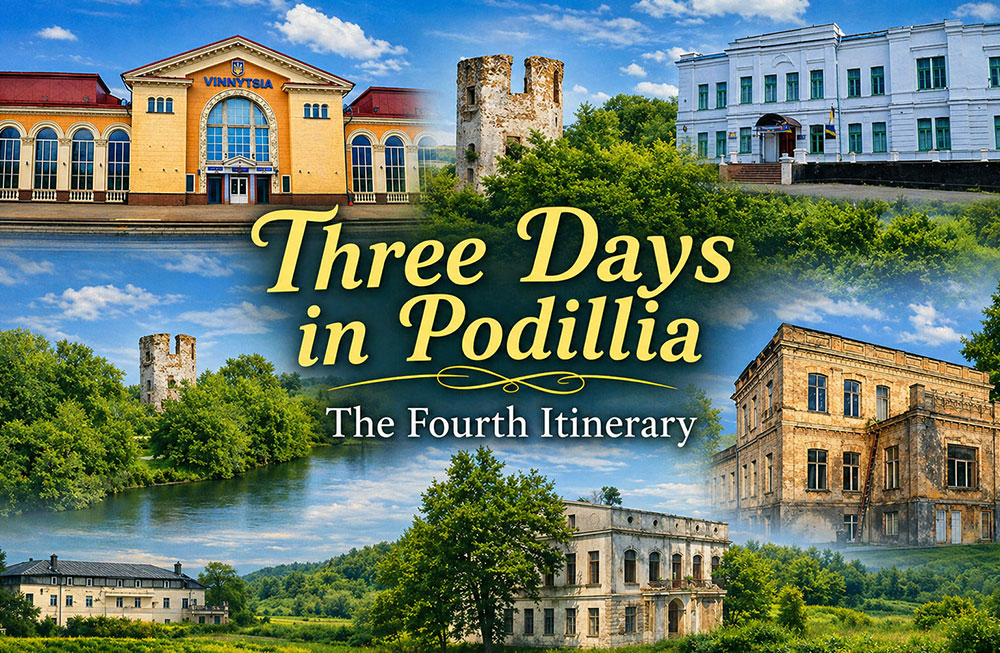
6450 UAH
Meals during the tour:
included in the tour price.
organized in atmospheric locations.
relaxation at the hotel (separately).
This route is for those who want to see Podillia as layered and alive. Over three days, you pass through city railway stations, castle ruins, music and literary museums, old residences, sacred complexes, pilgrimage sites, and grand palace ensembles of Vinnytsia region.
The first day is built around entering the route: from Vinnytsia and Brailiv to Zhmerinka and old Sharhorod. The second day reveals palace and sacred Podillia through Tulchyn, Tymanivka, and the Valley of Josaphat. The third day completes the journey through Pechera, Sokilets, Nemyriv, and Voronovytsia, bringing the route to a modern urban accent in Vinnytsia.
A separate advantage of the tour is that Sharhorod works here not only as a strong historical point, but also as a convenient base. Thanks to this, the route is rich without feeling scattered, and each day is perceived as a complete part of a larger journey through Podillia.
Tour start
Rafinad Sharhorod logically serves as the base of the route — the place to return to after eventful outings. This structure makes the three-day trip more coherent, convenient, and comfortable to experience.
Why it is worth going
In one journey, you will see different sides of Podillia: urban, museum-based, castle-related, noble, pilgrimage-focused, and modern.
The route connects strong points of Vinnytsia region without feeling like a random set of stops: from Cherlenkiv Castle and the museums of Brailiv to Tulchyn, Nemyriv, and Voronovytsia.
The program has both cultural and emotional depth: the Tchaikovsky Museum, the Zabashtansky Museum, the shrines of Sharhorod, the Valley of Josaphat, old palaces, and memorial sites.
In this tour, Sharhorod works both as an interesting destination in its own right and as a convenient route base to return to after eventful days.
The route is visually very diverse: castle ruins, estates, Catholic churches, a fortified synagogue, a pilgrimage valley, an old mill, a Scythian hillfort, palaces, and a city fountain.
Each day has its own character: the first is about entering the region, the second is about palace and sacred Podillia, and the third is about a grand finale with ancient history and an urban culmination.
This is a good format for those who enjoy meaningful journeys through Ukraine with a clear internal logic, not just a quick transfer between points.
Tour route
Tour description
Day 1. Vinnytsia, Brailiv, Zhmerinka, and old Sharhorod
The first day opens the journey in a very varied way. It begins in Vinnytsia, immediately leads the route into an old defensive theme, then shifts it into the musical and literary context of Brailiv, continues through Zhmerinka, and ends in Sharhorod — a town where history, sacred heritage, and the old urban landscape are gathered especially densely.
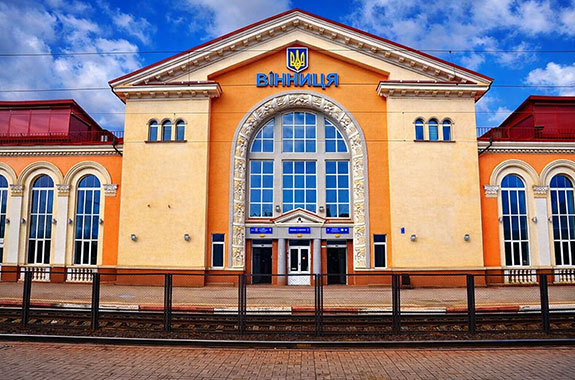
Vinnytsia railway station. Starting from Vinnytsia sets the right rhythm for the entire route. It is a large and convenient entry point into the journey, from which it is logical to begin moving through Podillia — from the city to local historical gems that gradually reveal the region in different dimensions.
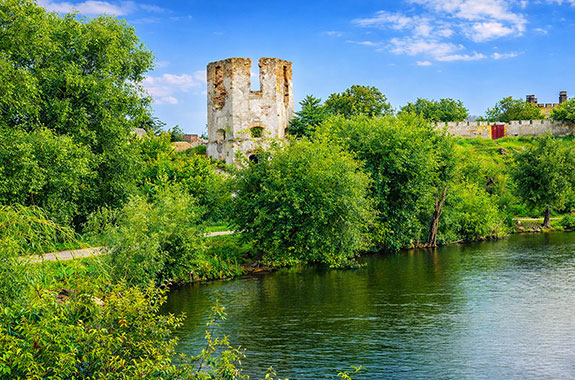
Cherlenkiv Castle, Selyshche. The first strong stop is Cherlenkiv Castle in Selyshche — the ruins of an ancient defensive structure that still hold the feeling of frontier Podillia. This place works not through luxury, but through the texture of time, the remains of fortifications, and the surrounding landscape itself.
P. I. Tchaikovsky and N. F. von Meck Museum, Brailiv. In Brailiv, the route sharply changes tone and moves into a cultural dimension. The museum, located in the former estate of Nadezhda von Meck, adds music, an intellectual atmosphere, and a feeling of old estate culture to the journey.
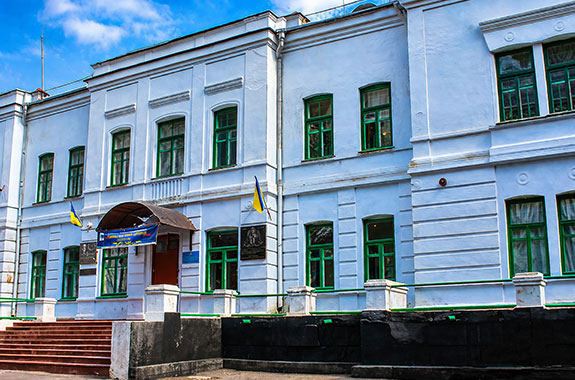
V. O. Zabashtansky Literary and Memorial Museum, Brailiv. Nearby, the Volodymyr Zabashtansky Museum fits very naturally. This stop makes the day deeper: after the musical theme, a living literary and personal story appears, connected with the cultural environment of Podillia.
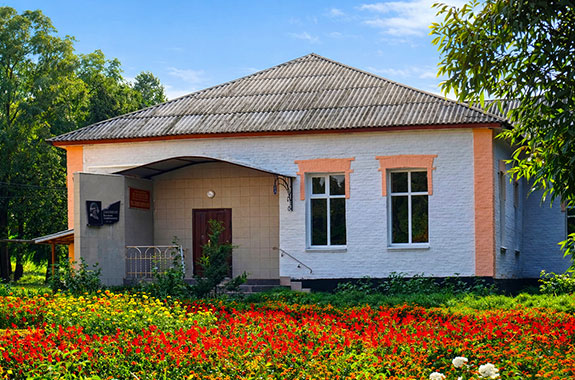
Zhmerinka railway station and Zhmerinka City History Museum. Then the route moves to Zhmerinka — a city where the railway theme is especially expressive. The station and the city history museum work here as a natural pair: first you feel the urban energy, and then you receive the historical context for this entire environment.
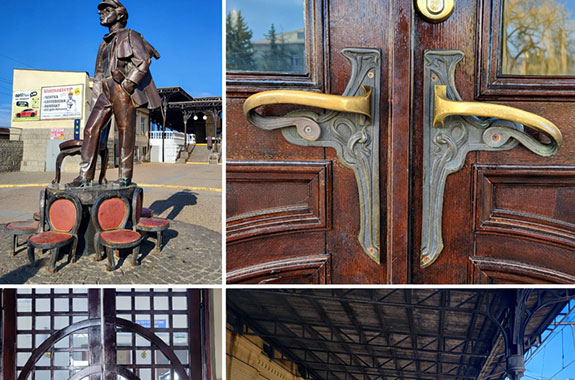

Shcheniovsky Palace, Nosykivka. After Zhmerinka, the day changes register again and moves toward intimate estate architecture. Shcheniovsky Palace in Nosykivka adds noble quietness, an old manor atmosphere, and a special sense of provincial yet very expressive Podillian history to the route.
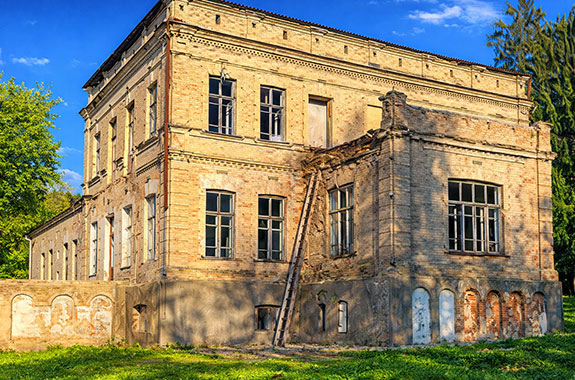
Sharhorod Castle. Entering Sharhorod naturally begins with the castle theme. Sharhorod Castle preserves the memory of the city’s defensive history and provides a good introduction to the multilayered space where different cultures and eras continue to intertwine.
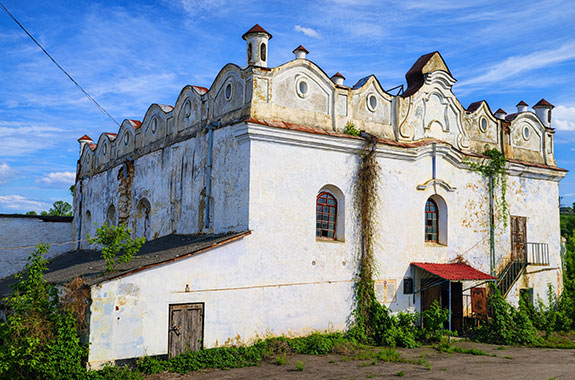
Great Fortified Synagogue. Next, the route reaches one of the main landmarks of old Sharhorod — the Great Fortified Synagogue. This is one of those locations that immediately gives the town scale and character. It strengthens the feeling that Sharhorod is not simply picturesque, but truly historically powerful.
Stations of the Cross and the Church of Saint Florian. The end of the day in Sharhorod enters a sacred dimension. The Stations of the Cross add inner silence and concentration to the route, while the Church of Saint Florian provides a strong architectural and spiritual accent. After such a finale, returning to Rafinad Sharhorod feels like the logical completion of a very eventful first day.
Day 2. Palace Podillia, shrines, and a space of silence
The second day has a different rhythm. If the first was about entering the route and getting to know its character, the second reveals Podillia more deeply through noble residences, sacred sites, and locations where calm and inner focus are felt especially strongly.
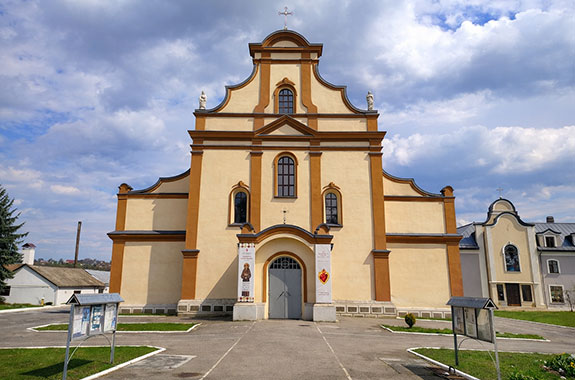
Rafinad Sharhorod. The morning begins at Rafinad Sharhorod, from where the route continues through Vinnytsia region. The first important stop is the Church of the Immaculate Conception of the Virgin Mary. This place sets the right tone for the whole day: restrained, attentive, and unhurried. These are exactly the kinds of locations from which it is good to begin a route where the sacred theme is not a background element, but a full part of the journey.
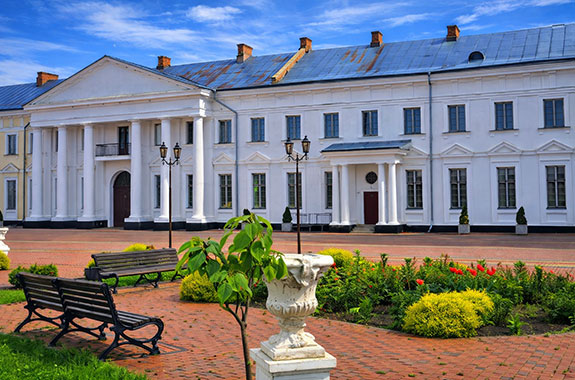
Potocki Palace, Tulchyn. After that comes Tulchyn with the Potocki Palace. This is one of those locations that immediately works on a grand scale. Here, Podillia opens up as a space of great palace culture, where architecture, history, and the urban environment create a completely different impression than the intimate estates of the previous day. Tulchyn is the strong central point of the second day on this route.
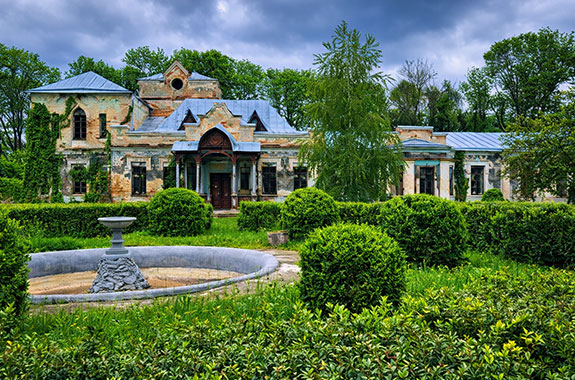
Bakhmetiev-Sheremetev Palace, Tymanivka. Next, the route leads to Tymanivka, where the Bakhmetiev-Sheremetev Palace continues the theme of noble Vinnytsia region, but in a different register. After Tulchyn, this stop feels more intimate, yet it is in such places that the living, rather than ceremonial, Podillia is best felt — with its history of estates, manors, and the local cultural landscape.
Valley of Josaphat. The culmination of the day is the Valley of Josaphat. After the architectural sites, this kind of location gives the route depth. It is a space that works not through a facade, but through mood, silence, and a pilgrimage atmosphere. Here the journey gains another dimension: not only educational, but also inward.
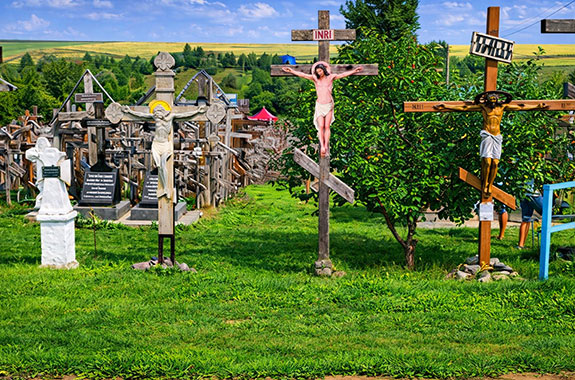
Returning to Rafinad Sharhorod after such a day feels especially appropriate. It closes the route circle and allows what you have seen to be perceived not as a set of separate points, but as a thoughtfully designed part of a larger journey through Podillia.
Day 3. Pechera, Nemyriv, Voronovytsia, and the final chord in Vinnytsia
The third day is the most contrasting and expansive. It combines memorial sites, technical historical heritage, ancient archaeology, palace architecture, and a modern urban finale. That is why it works so well as the conclusion of the entire journey.
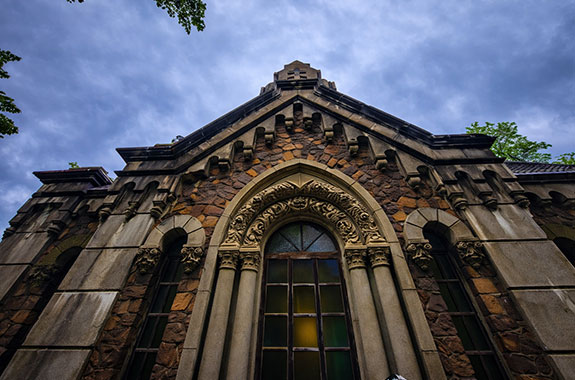
Potocki crypt-mausoleum, Pechera. Departure from Rafinad Sharhorod leads to Pechera, where the route begins with the Potocki crypt-mausoleum. This place sets a focused tone for the day. It is not about outward spectacle, but about historical weight, memory, and the special atmosphere of an old landscape.
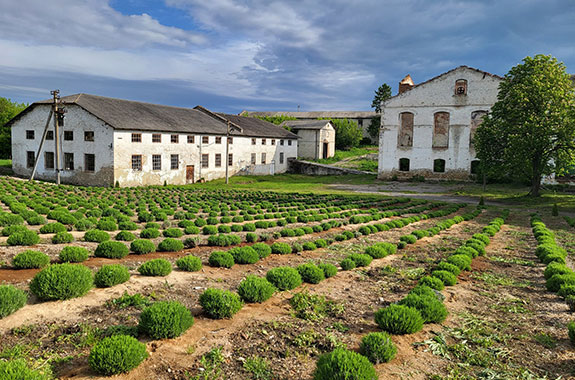
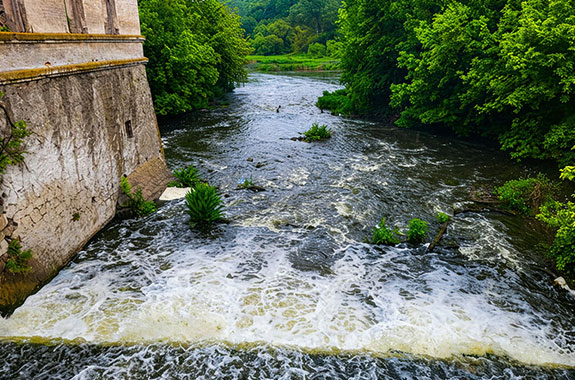
Potocki water mill, Sokilets. Then the route moves to Sokilets, where the Potocki water mill shows another face of Podillia. After the memorial stop in Pechera, this location adds materiality, texture, and the economic dimension of history. Here it is clear that the region’s past is not only palaces and shrines, but also large structures connected with real life and work.
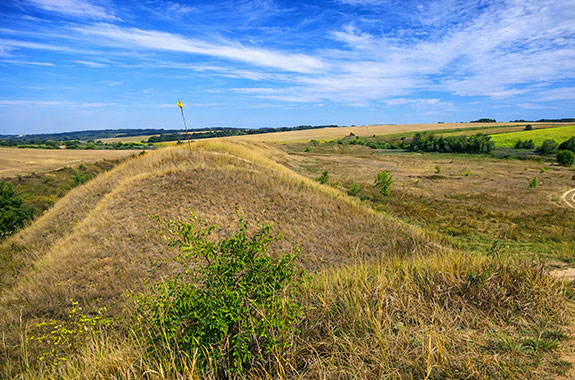
Nemyriv Scythian Hillfort. Then the route sharply expands its time perspective and reaches the Nemyriv Scythian Hillfort. This is one of those points where the depth of time is felt especially strongly. After the local estate and memorial history, a completely different scale appears here — ancient, almost epic. This stop is what makes the third day especially powerful.
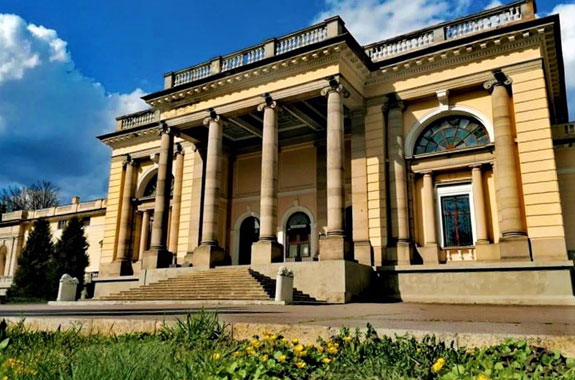
Countess Shcherbatova Palace. Nearby, the Countess Shcherbatova Palace also fits logically. After the hillfort, the route returns to the palace theme, but in a different way: not as a repetition of the second day, but as the completion of the journey’s large historical arc. Palace architecture here is perceived as another important layer of the cultural landscape of Vinnytsia region.
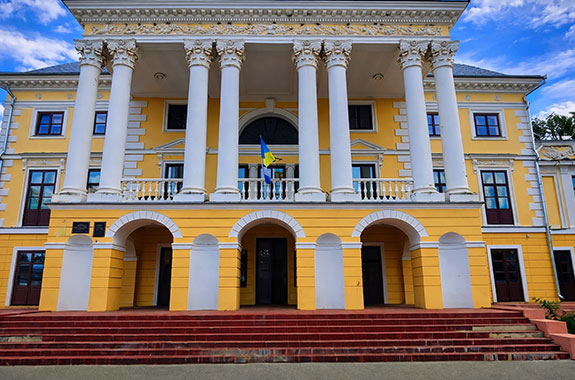
Grokholsky-Mozhaisky Palace, Voronovytsia. The Grokholsky-Mozhaisky Palace in Voronovytsia brings the route to its pre-final height. This place works especially well near the end of the journey because it combines architectural expressiveness, the atmosphere of an old estate, and the feeling that the route has reached a major concluding accent.
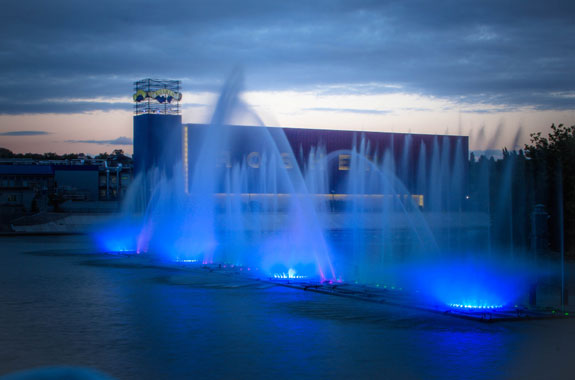
Fountain in Vinnytsia. The final point is the fountain in Vinnytsia. After three days of historical towns, shrines, estates, castle and palace locations, this is a very fitting finale. It shifts the route into a modern urban rhythm and leaves a bright, spectacular, and complete impression after the journey.
Who this tour is suitable for
This route will appeal to those who love history but do not want a dry presentation. Here, the past is felt through towns, palaces, shrines, old structures, and the very atmosphere of the places.
It is suitable for architecture lovers, because the program includes a railway station, museum space, palaces, Catholic churches, castle heritage, a fortified synagogue, a mill, and memorial sites. Visually, the route constantly changes, so it does not become tiring through monotony.
This is a good choice for those drawn to sacred places and quiet locations. Kopaigorod, the Spring of the Virgin Mary, the Church of the Immaculate Conception of the Virgin Mary, and the Valley of Josaphat add special depth to the trip.
The tour is also suitable for those who enjoy unhurried journeys through Ukraine, where not only photos matter, but also the feeling of the route, its logic, and its inner coherence.
What is included in the price
a three-day route program covering the stated locations;
route organization and group support;
being based in Sharhorod with returns to Rafinad;
transfers between locations according to the tour program;
accommodation, if the tour is arranged as a package with overnight stays.
Paid additionally
entrance tickets to sites where they are required;
meals, if they are not included in the package;
personal expenses during the journey;
additional services not specified in the main program.
Accommodation / meals / organizational details
Accommodation. The route is built so that Sharhorod serves as a convenient travel base. This reduces the hassle of transfers and allows you to experience the program more comfortably without constantly changing your overnight location.
Meals. Starting in Zhmerinka makes joining the tour convenient, while the finale in Vinnytsia adds a strong concluding accent to the route. The meal format and the final list of organizational details should be clarified separately depending on the specific tour package.
Organizational details. Sharhorod works in this route as a convenient return point after excursion days, so the logistics themselves feel much more comfortable and coherent.
Final summary / CTA
This tour is a good way to see Podillia attentively and genuinely. Over three days, you pass through urban history, old residences, sacred places, defensive heritage, ancient landscapes, and a modern urban finale.
This is a journey for those who want not just to visit several locations, but to feel the region. If you are drawn to routes that combine history, architecture, atmosphere, and logic, this Podillia option is definitely worth your attention.