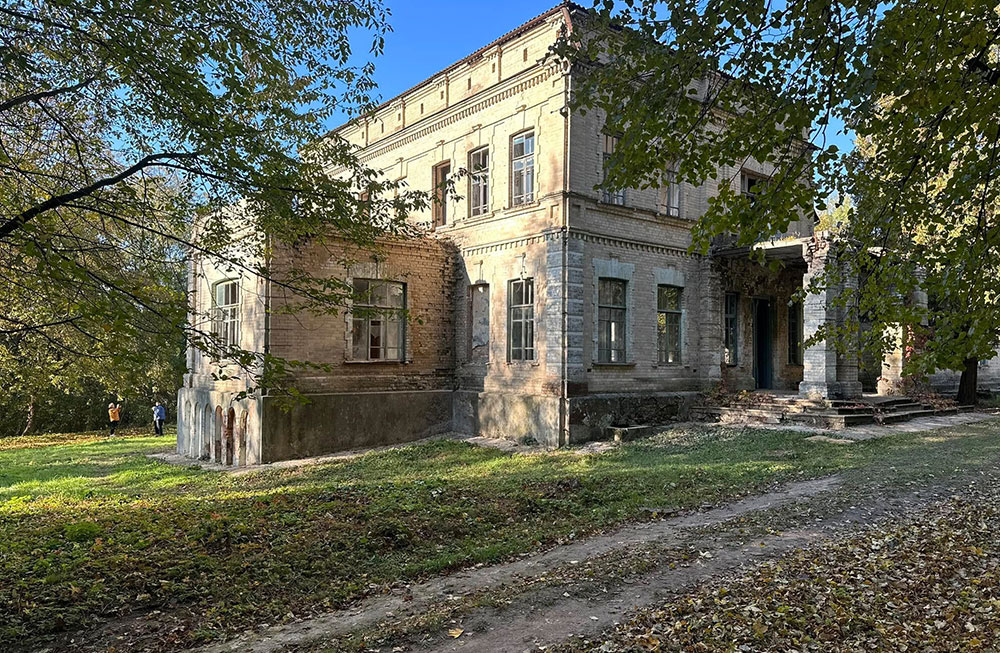
Location: Nosykivka village
Period: late 19th c. (1886 — per sources)
Owners: Shchenovskyi family (Stanislav, Ignatsii)
Components: palace + park + wall + guardhouse + tower
Site overview
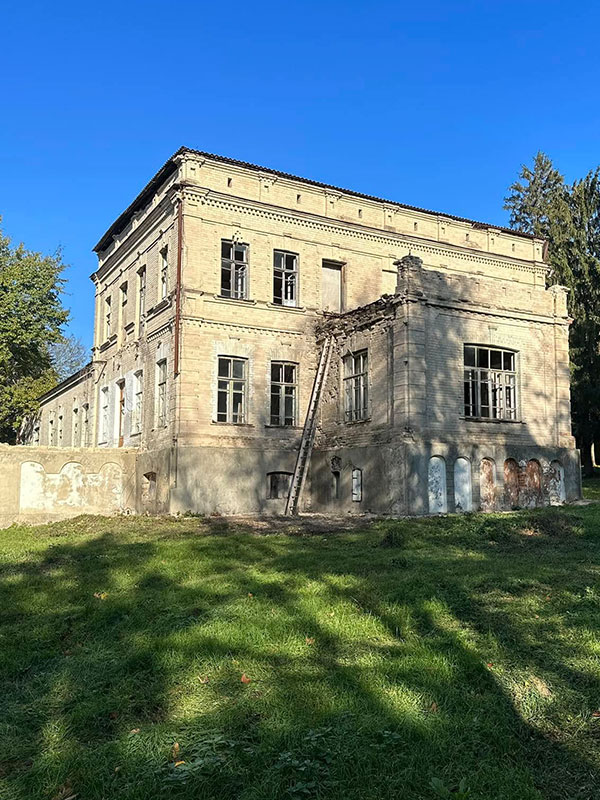
Shchenovskyi Palace in the village of Nosykivka is a manor complex from the late 19th century, described in publications as the palace of “sugar magnates”.
Media and local-history materials mention the construction date of 1886. Sources: Suspilne Vinnytsia,
ZAXID.NET.
For green tourism, the site is valuable as a combination of architecture, a historical park, and panoramic viewpoints.
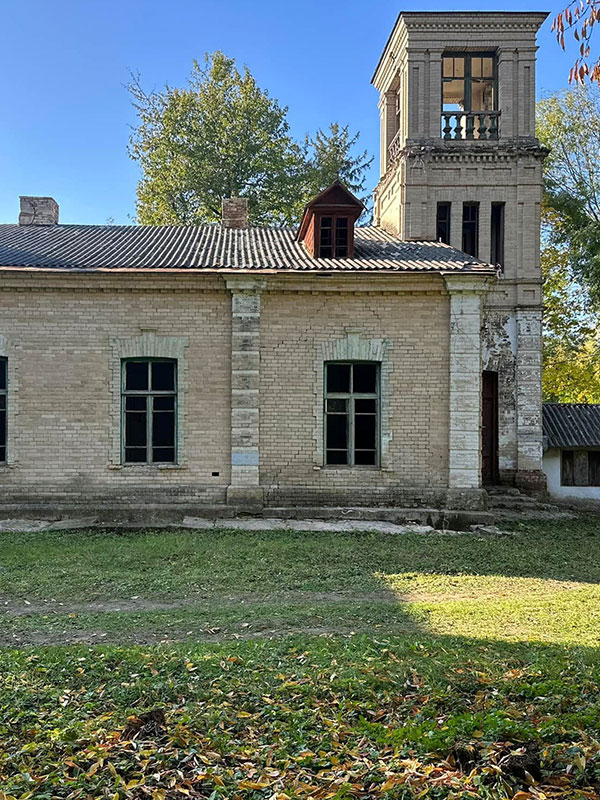
Reference guides mention: the manor’s hilltop location, an old park, a perimeter wall and a guardhouse near the gate, and a decorative tower. Sources: travels.in.ua,
Vinbazar.
Regarding interior details, publications emphasize preserved decorative elements (including stucco), and also mention original carpentry and tiles (in some announcements/initiative reports).
For publication, keep these points strictly tied to a cited source and avoid overgeneralization. Sources: Ukraina Incognita (site page),
Ukraina Incognita (tour-opening notice).
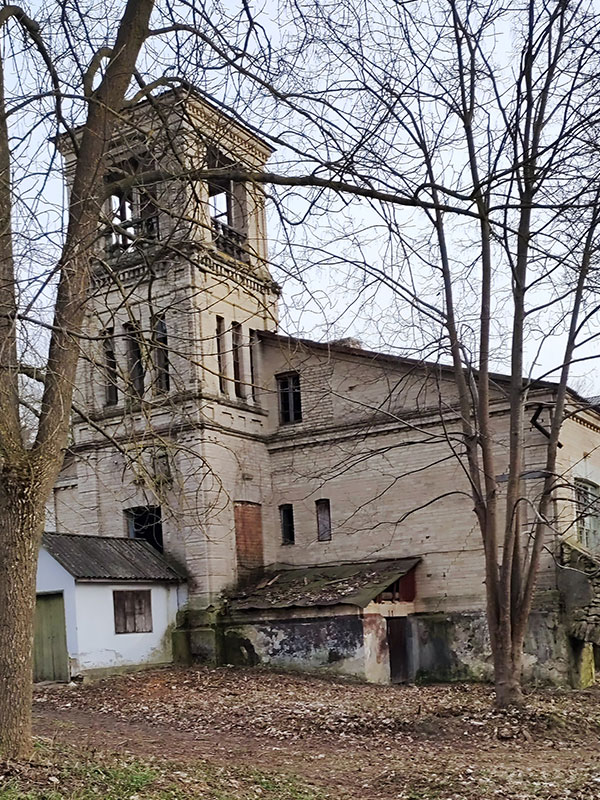
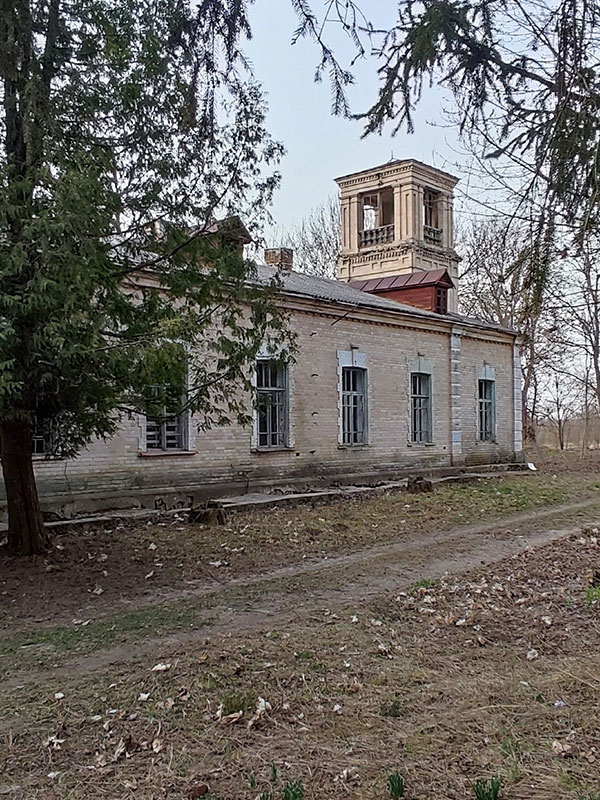
Photos
History
Estate origins and dating
Media publications state that the palace in Nosykivka was built in 1886. Sources: Suspilne Vinnytsia,
ZAXID.NET.
Owners and socio-economic context
Some materials name Stanislav Shchenovskyi as the last owner and provide information about his father, Ignatsii, as a figure in the sugar industry.
For the article, separate verified biographical facts from general statements and always cite the source. Source: ZAXID.NET.
20th century events and functional changes
A local-history note states that at different times the building was used as a hospital and pharmacy, a school, and a post office.
The same source mentions a period of neglect of the building and park, noting that fragments of interior stucco remained. Source: Ukraina Incognita.
Restoration, opening of visits, current status
In 2024, reports described restoration work and the launch of the first tours/visits after a long break.
For page updates, record the status “as of the publication date” and link to the primary source. Source: Suspilne Vinnytsia.
Architectural features
Style and composition
Reference guides describe the palace as an example of late-19th to early-20th-century manor building in Podillia.
For an on-site visit, visitors should document: overall composition, characteristic projections/massing, silhouette, and decorative accents. Source: travels.in.ua.
Details that shape recognition
- A decorative tower as the silhouette’s dominant element (mentioned in guides).
- The perimeter wall and a guardhouse by the gate as parts of manor infrastructure.
- Interior decoration: stucco (mentioned in local-history materials).
References: travels.in.ua,
Vinbazar,
Ukraina Incognita.
State of preservation and safety rules
Due to potential structural risks, entering interior spaces should be considered only under official access conditions and with an organizer/owner escort (if such a format is in place).
For green tourism, the priority is exterior viewing and photo documentation without entering potentially unsafe areas.
Natural surroundings
The park as part of the site
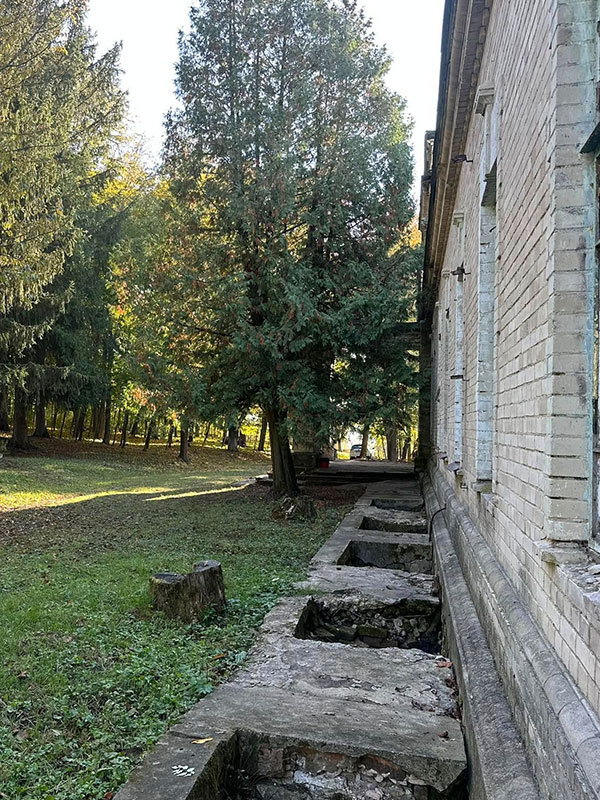
Sources highlight the presence of a historical park around the palace.
For a green-tourism audience, the park is the main on-site space: quiet walks, observation, and photography. Sources: travels.in.ua,
Ukraina Incognita.
Eco visit protocol
- Walk along accessible paths; do not drive onto lawns/woodland edges.
- Zero waste: take all trash with you.
- Quiet mode: no loud sound and no disturbance of the natural environment.
Tourist infrastructure
Recommended visit format
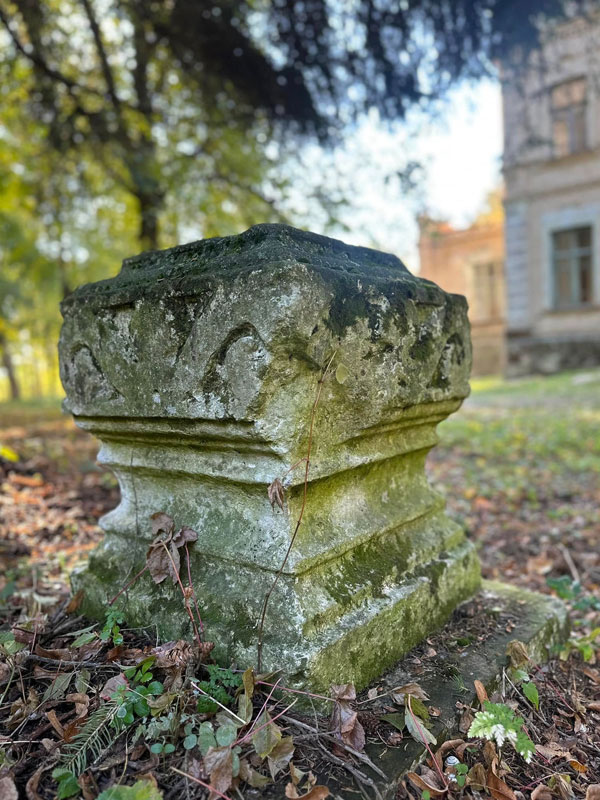
On-site route: facade viewing → entry group (wall, guardhouse) → park walk → photos of highlights (tower, decor details) → brief wrap-up.
Access and organizational conditions
At different times, access may have been restricted due to the building’s condition or due to organized-visit schedules.
Before traveling, check current visiting conditions via official announcements/organizers. Reference: Suspilne Vinnytsia.
Time on site
Estimated duration: 60–120 minutes (including a park walk and photo documentation).
What to bring (practical)
- Comfortable shoes for dirt paths and grassy areas.
- Water, a light snack, and a bag for your own trash.
- Tick/insect protection in season.
Expert analysis
Why the site matters for cultural and green tourism
Shchenovskyi Palace is an example of late manor architecture where the architectural core is reinforced by a landscape frame — a historical park and a panoramic hilltop position.
For visitors, this creates a clear scenario: architecture → landscape → details (tower, entry group, decor) without the need for intensive impact on the environment. References: travels.in.ua,
Vinbazar.
Comparison table with other regional estates
| Site | Period/dates (per reference data) | Style (general) | Key highlight for visitors | Visit format |
|---|---|---|---|---|
| Shchenovskyi Palace (Nosykivka) | 1886 (per sources) | Late-19th-century manor architecture; Historicism (generalized from guides) | Tower, wall and guardhouse, hilltop park | Facade viewing + entry group + park walk + detail photos |
| Count Ksido Palace (Khmilnyk) | 1911–1915 | Neoclassicism with historic motifs | Contrasting facades; photogenic angles | Short viewing + photos + walk around |
| Czacki Palace (Serebryntsi) | Late 18th c. / 1831 (different versions appear in sources) | Classicism | Portico/pediments, a readable classical composition | Facade viewing + detail photos |
| Potocki Palace (Tulchyn) | Second half of the 18th century (often cited as 1782) | Classicism | Ensemble scale and ceremonial character | Long route + guided narrative |
FAQ
Where is Shchenovskyi Palace located?
In the village of Nosykivka (Vinnytsia Oblast). Reference card: travels.in.ua.
Which construction year do sources cite most often?
Publications mention the year 1886. Sources: Suspilne Vinnytsia, ZAXID.NET.
Which parts of the complex are must-see?
The palace facades, the decorative tower, the entry group (wall, guardhouse), and the historical park around the site. Sources: travels.in.ua, Vinbazar.
Is it known how the building was used in different periods?
Publications mention its use as a hospital and pharmacy, a school, and a post office. Source: Ukraina Incognita.
Is it safe to go inside the palace?
Safety depends on the site’s condition and access regime. For green tourism, exterior viewing is recommended unless you have official permission/escort.
How much time should I plan for the visit?
Typically 60–120 minutes, including a park walk and detail photography.
Sources
- Suspilne Vinnytsia — restoration/opening and dating
- ZAXID.NET — history, owners, context
- travels.in.ua — site reference card
- Ukraina Incognita — site page (functions, condition, park)
- Ukraina Incognita — opening notice
- Vinbazar — territory description, wall/guardhouse, reuse plans
- shargorod.net — local overview post (settlement context)
Video overview
Location on the map