Location: Serebryntsi (Serebryntsi) village
Style: Classicism (early/mature — per sources)
Family: Czacki (Чацькі)
Component: manor park
Site overview
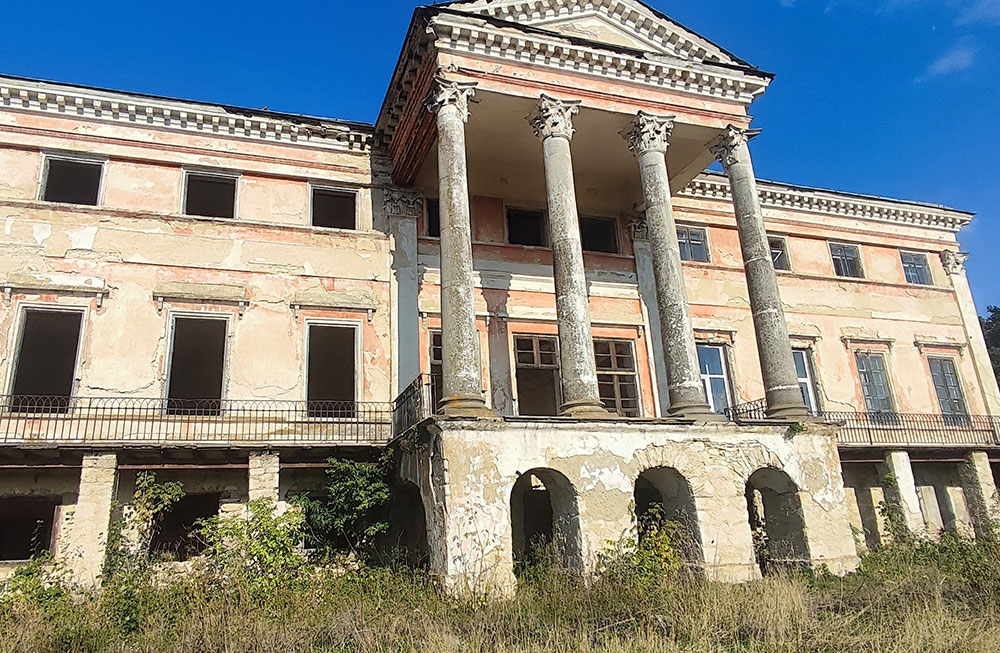
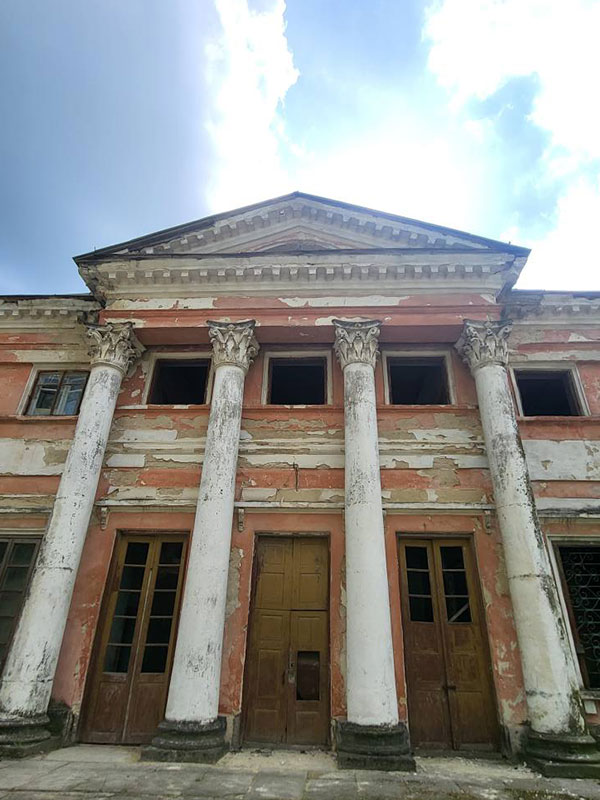
Czacki Palace is a manor palace in the village of Serebryntsi (Mohyliv-Podilskyi District, Vinnytsia Oblast), described in reference materials as an architectural monument in the style of Classicism.
Sources provide differing dates for the formation of the preserved building: some materials point to the late 18th century (including references to the 1770s–1780s),
while others associate the surviving two-storey palace with the 19th century (in particular, the year 1831).
For publication, it is recommended to state the dating strictly “per sources” and explicitly note discrepancies.
References: Wikipedia,
travels.in.ua,
library.vn.ua,
Ukraina Incognita.
Green-tourism visit format: a facade and composition overview + a walk around the former park territory (where accessible) + photo documentation of details (porticos, pediments, plinth arcades, stucco).
Photos
History
The Czacki family and the Serebryntsi estate
Local-history materials associate the estate with the Czacki family and mention ownership/inheritance in the late 18th and 19th centuries.
For accuracy, rely on sources that provide specific wording on owners and dates.
References: travels.in.ua,
library.vn.ua.
Construction and rebuilding dates (recording discrepancies)
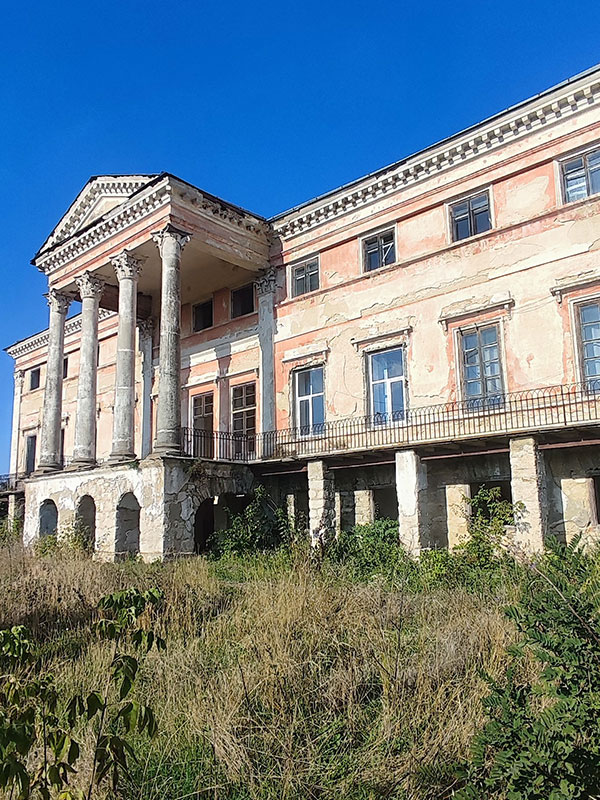
Wikipedia and some publications describe a rectangular two-storey palace with porticos on four Corinthian columns and pediments; they also mention a high plinth on the park side and an arcaded plinth/gallery.
Source: Wikipedia.
Meanwhile, a travel directory provides a version that the preserved palace was built in 1831 (in mature Classicism).
Source: travels.in.ua.
20th century: use and condition
Publications about the palace mention changes of function and preservation challenges, as well as local initiatives to draw attention to the site.
References: portalhistoryua.com,
naparisi.com,
vn.20minut.ua.
Restoration and outlook
The article should separately record: current works/plans, responsible parties, funding sources (if confirmed), and the official protection status.
Reference pages: discover.ua,
rda-m-p.gov.ua.
Architectural features
Style and typology
The site is described as an example of Classicism (some publications specify “early” vs “mature” Classicism).
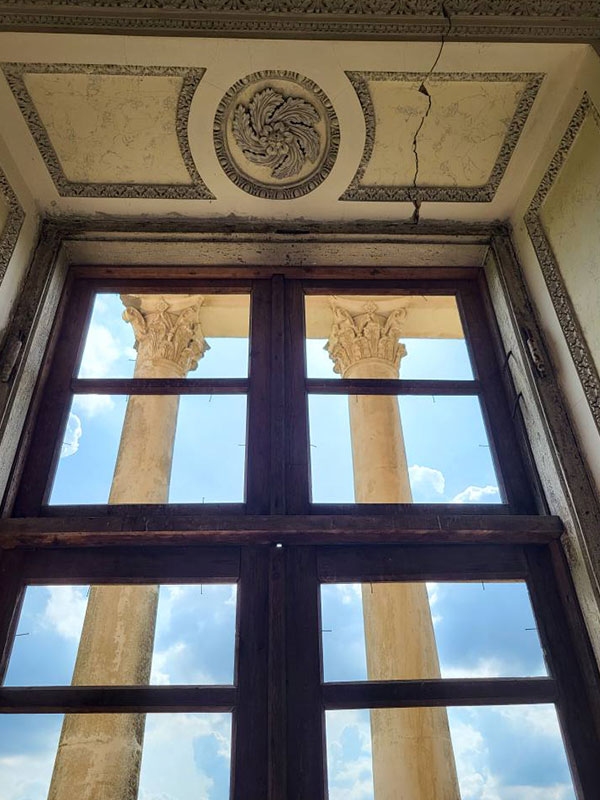
Core features per descriptions: a two-storey rectangular volume, porticos with four Corinthian-order columns, triangular pediments.
Sources: Wikipedia,
Ukraina Incognita.
Composition and facades (inspection checklist)
- Front portico: column proportions, capitals, pediment.
- Park facade: portico and high plinth; plinth arcades/gallery (where visible).
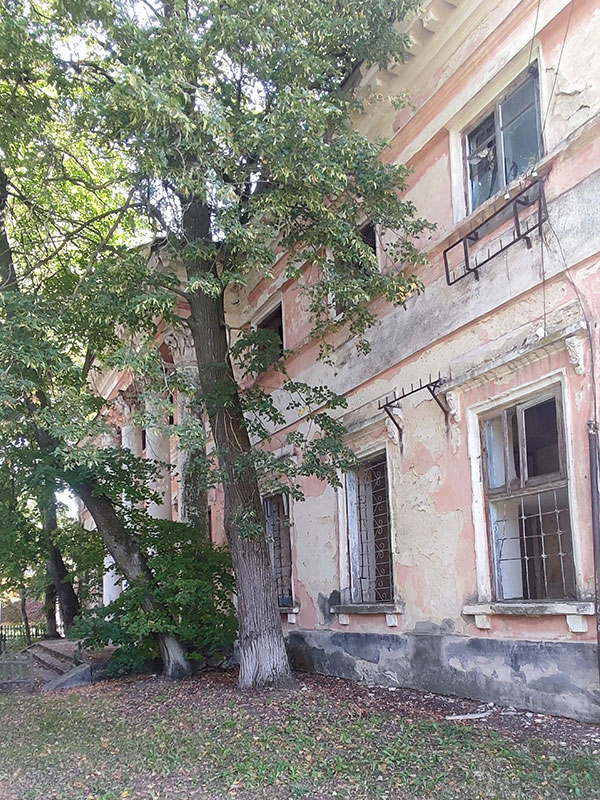
- Window rhythm, cornices, horizontal moldings.
Interiors and decor (confirmed only)
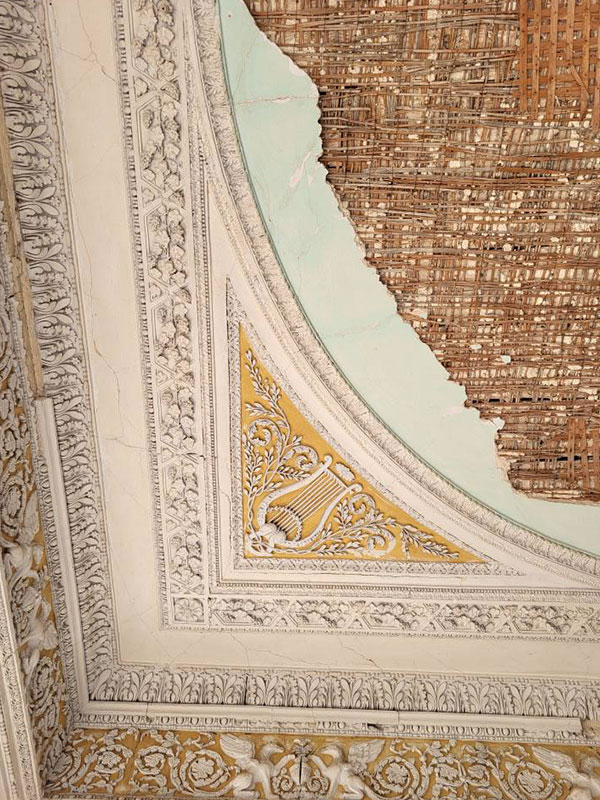
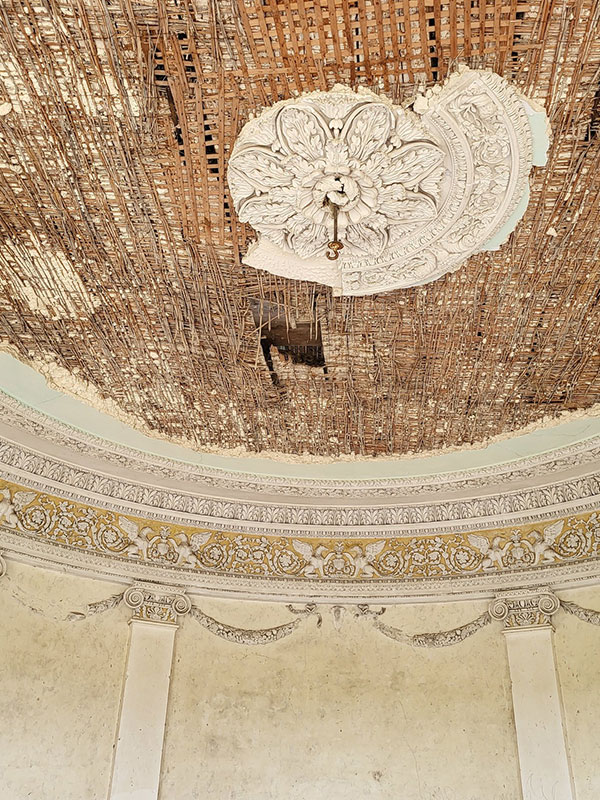
Descriptions note the presence/remaining stucco as an important interior indicator.
For publication, record only what is confirmed by current sources and/or on-site photo documentation.
Reference: Wikipedia.
Natural surroundings
Manor park (outline and experience)
The site is best presented as a “palace + former manor/park territory” combination.
For green tourism, key parameters are walking accessible segments, minimal impact on the environment, and photo observation without interference.
Eco visit protocol
- Walk on foot; avoid damaging soil and vegetation.
- Zero waste: take out everything you bring in.
- Quiet mode: no loud music or mass activities.
Tourist infrastructure
Visit scenario (green format)
Base scenario: facade viewing → park-side/plinth viewing → detail photos → brief summary of history and architecture.
Accessibility and safety
Due to preservation issues, access restrictions and unsafe zones are possible.
Route planning requires checking current visiting conditions (local rules, fences, warnings).
References: discover.ua,
rda-m-p.gov.ua.
Info points and services
- Navigation: approach/entry point to the territory.
- Time on site: 45–90 minutes (without entering closed zones).
- Photo mode: no entry into аварійні/unsafe premises.
Expert analysis
Cultural value (applied wording)
Czacki Palace is important as a representative example of manor Classicism in Podillia and as a site whose facade composition
(porticos with Corinthian columns, pediments, high park-side plinth) provides a clear case for cultural and green-tourism routes.
Key features should be fixed per sources: Wikipedia,
Ukraina Incognita.
Comparison table with other regional estates
| Site | Period/dates (per reference data) | Style (general) | Key highlight for visitors | Visit format |
|---|---|---|---|---|
| Czacki Palace (Serebryntsi) | Late 18th c. (some sources) / 1831 (some sources) | Classicism (early/mature — per sources) | Twin porticos (front/park), Corinthian columns, high arcaded plinth | Facade viewing + walk around the grounds + detail photos |
| Count Ksido Palace (Khmilnyk) | 1911–1915 | Neoclassicism with Renaissance motifs | Contrasting facades; “palace-fortress”; viewpoints | Short viewing + photos + walk around |
| Mering Palace (Stara Prylu ka) | 1905–1906 (in sources) | Neo-Baroque / Historicism | Reference to a capital prototype; photogenic facade | Short viewing + photos + walk |
| Potocki Palace (Tulchyn) | Second half of the 18th c. (often 1782) | Classicism | Ensemble scale and ceremonial character | Long route + guided narrative |
FAQ
Where is Czacki Palace located?
Serebryntsi (Serebryntsi) village, Mohyliv-Podilskyi District, Vinnytsia Oblast. Reference cards: discover.ua, en.discover.ua.
Which construction dates are cited by sources?
Some sources point to the late 18th century (including the 1770s–1780s), while others give 1831 for the preserved palace. References: Wikipedia, travels.in.ua.
What architectural style is the palace associated with?
Publications classify the site as Classicism; some specify early vs mature Classicism. References: Wikipedia, Ukraina Incognita.
Which elements are worth looking for during the viewing?
Porticos with four Corinthian columns and triangular pediments, a high park-side plinth, and an arcaded plinth/gallery (per descriptions). Reference: Wikipedia.
How much time should I plan for a green-tourism visit?
Usually 45–90 minutes: facades + park side + detail photos + a short walk around accessible grounds.
Sources
- Wikipedia — Czacki Palace (Serebryntsi)
- Ukraina Incognita — Serebryntsi: the palace
- Vinnytsia Regional Library — material about the Czacki family / Serebryntsi
- discover.ua — M. Czacki Palace (reference card)
- en.discover.ua — M. Chatskyi Palace (reference card)
- travels.in.ua — Czacki Palace, Serebryntsi (version with the 1831 date)
- portalhistoryua.com — the palace in Serebryntsi (condition/context)
- naparisi.com — news about the palace (preservation context)
- vn.20minut.ua — article about the palace (description/context)
- rda-m-p.gov.ua — Czacki Palace (reference page)
- shargorod.net — Czacki Palace in Serebryntsi (overview post)
Video overview
Location on the map