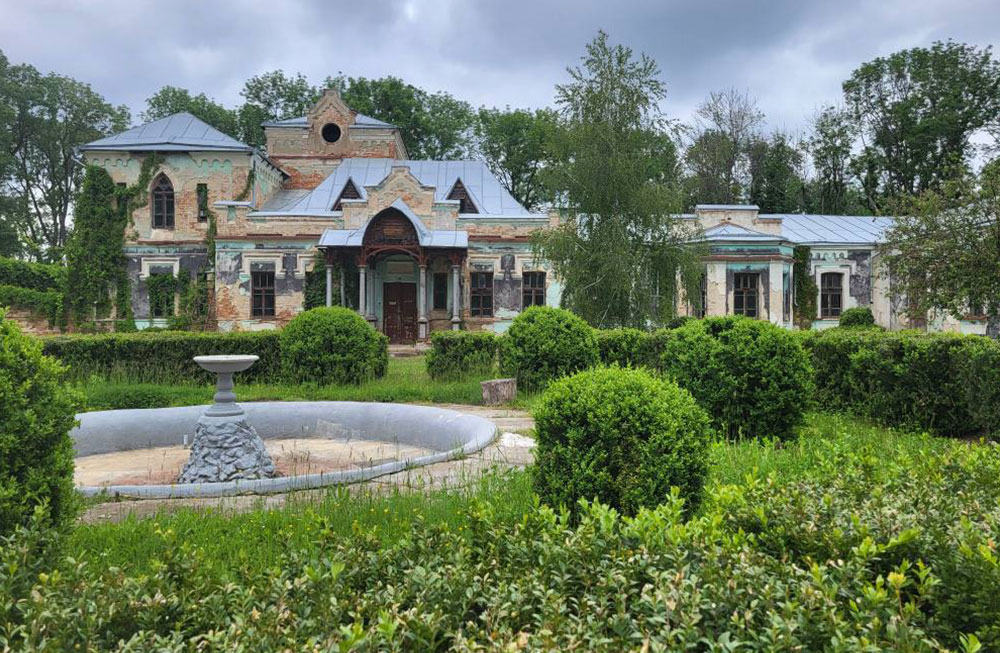
Location: Tymanivka village
Era: early 19th c. → additions in the early 20th c.
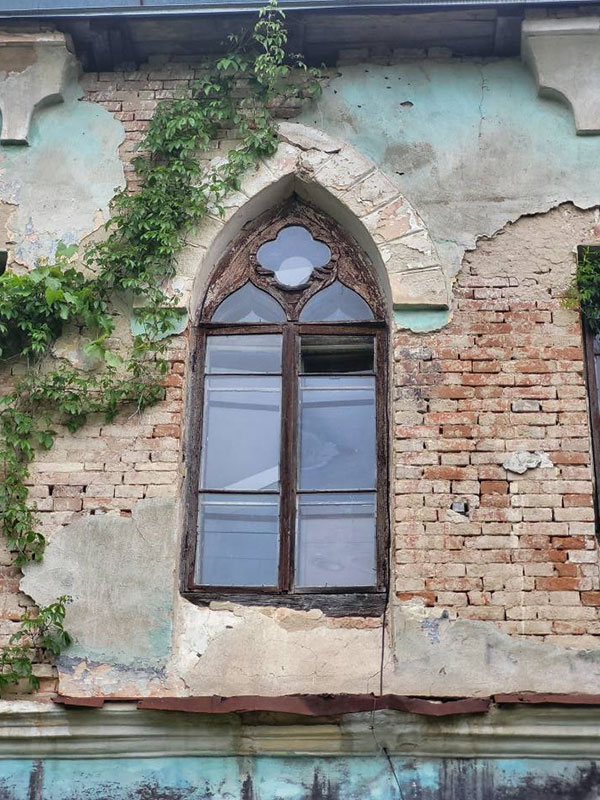
Style: Neo-Gothic (rare for Podillia)
Owners/periods: Sviatopolk-Chetvertynskyi → Bakhmetiev → Tol → Sheremetev
Components: palace + park + fountain/pond (per descriptions)
Site overview
The Bakhmetiev–Sheremetev Palace in Tymanivka is a manor complex with a park, described in sources as a monument of architecture and landscape art of local significance.
Materials emphasize the site’s tourism value even given preservation issues. Sources:
travels.in.ua,
Tulchyn Community.
According to descriptions, construction of the palace began in the early 19th century: the foundation and basements were laid with the involvement of Prince Gotfried Sviatopolk-Chetvertynskyi,
and the next stage is associated with Prince Oleksii Bakhmetiev-Protasov, who completed the complex and gave it pronounced Neo-Gothic features.
Sources: Tulchyn Community,
Suspilne Vinnytsia,
travels.in.ua.
For green tourism, the site is best presented as an “architecture + park” route: viewing the silhouette and Neo-Gothic details, followed by a park walk with an emphasis on quiet nature and photo spots.
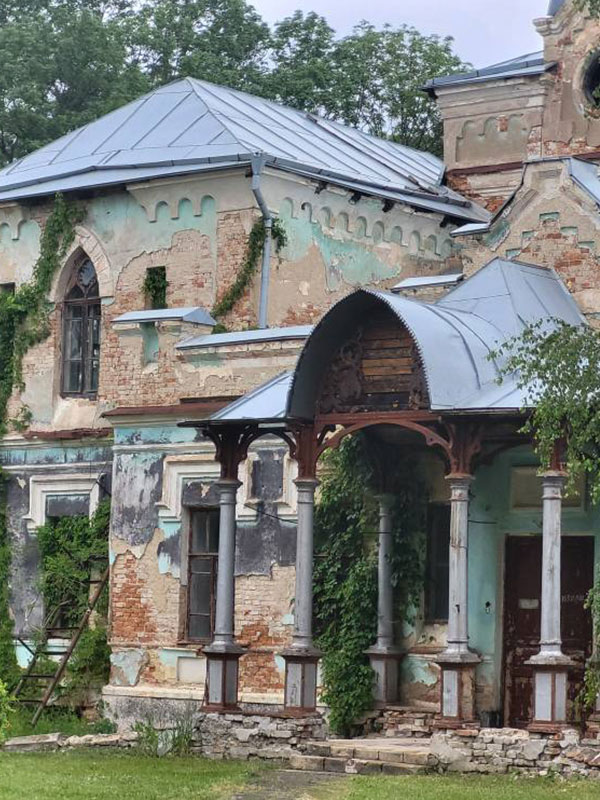
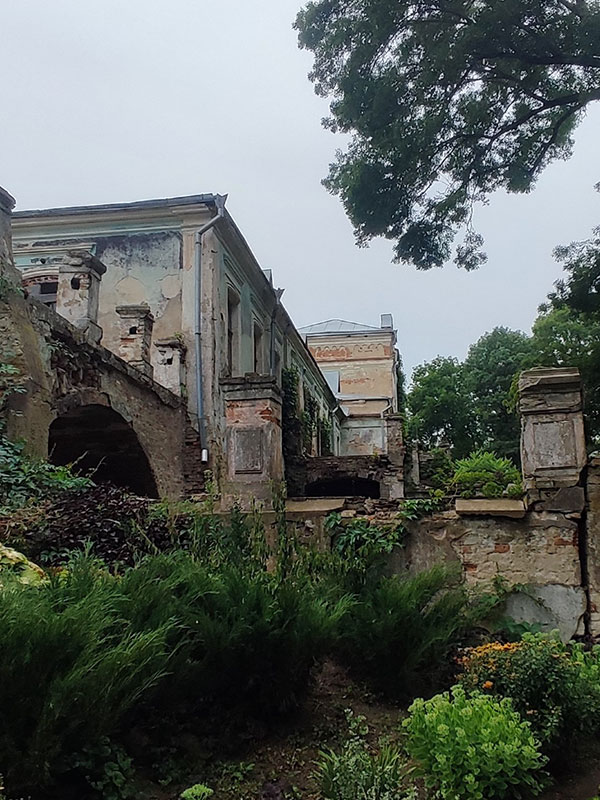
Some publications mention early-20th-century additions (including a side extension with an arch/terrace) and engineering improvements of the estate under later owners.
Sources: travels.in.ua,
Ukrinform.
Photos
History
Formation of the estate: the beginning
Publications state that the start of the complex’s construction in Tymanivka dates to the early 19th century.
A separate stage mentions laying the foundation and basements with the involvement of Prince Gotfried Sviatopolk-Chetvertynskyi. Sources:
Tulchyn Community,
travels.in.ua.
The Bakhmetiev stage: completion and style
The next stage is associated with Prince Oleksii Bakhmetiev-Protasov.
Sources emphasize that during this period the palace acquired pronounced Neo-Gothic features (an atypical solution for Podillia). Sources:
Suspilne Vinnytsia,
travels.in.ua,
Ukrinform.
Early-20th-century additions and owners
Some descriptions mention additions in the early 20th century, when Volodymyr Tol (Tol) is named as the owner — including a side extension with an arch and a terrace,
connected by stairs leading into the park. Source: travels.in.ua.
Sources also mention the last owner — Count Oleksandr Sheremetev — and associate his period with a number of economic/engineering changes on the estate and grounds.
Source: travels.in.ua.
Functional changes in the Soviet period
Reports state that during the Soviet era the palace housed an anti-tuberculosis sanatorium (with varying clarifications in different materials regarding buildings and later relocation of functions).
Sources: travels.in.ua,
20minut.ua.
Current condition and local initiatives
Publications in recent years mention local initiatives related to cleaning/maintaining the territory and ideas for developing the park space.
One example is reports of lavender planting in the park as part of a local project. Source:
travels.in.ua.
Architectural features
Style and composition
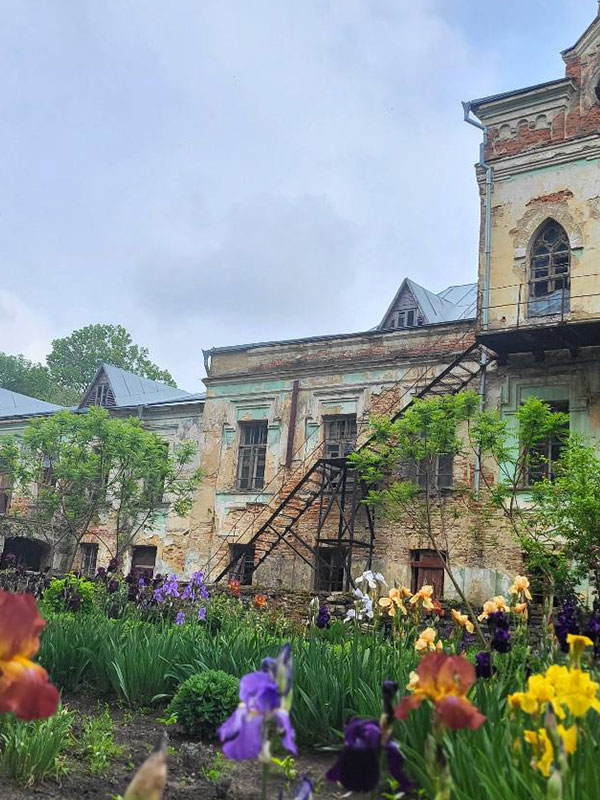
Sources define the site as a Neo-Gothic palace (the initial image is Neo-Gothic, with later additions from different periods).
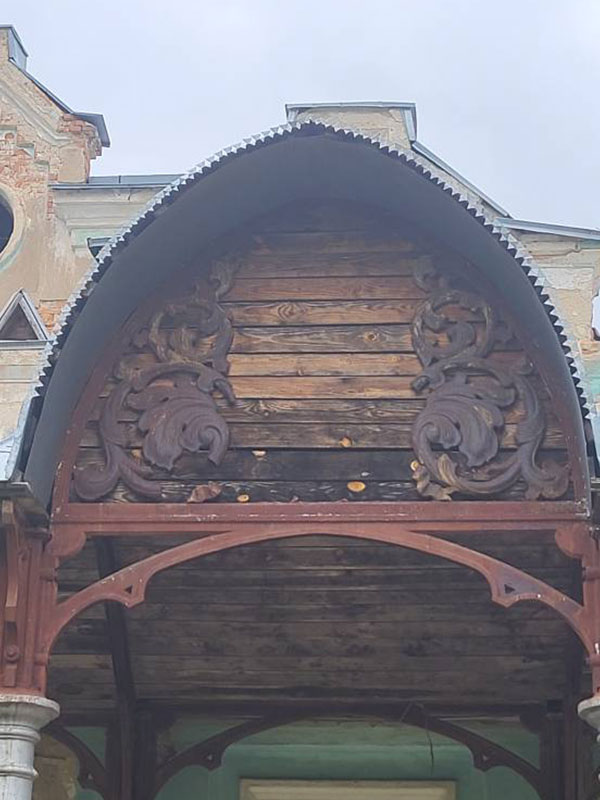
For a tour product, record: the silhouette, vertical accents, rhythm of openings, and decorative motifs typical of Neo-Gothic architecture. Sources:
travels.in.ua,
Ukrinform.
Additions and “layers of time”
The viewing route should separate the original core of the complex from later additions (mentioned in sources for the early 20th century),
with a short explanation: “what was added” and “how it changed the facade’s perception”. Source:
travels.in.ua.
Preservation state and safety protocol
If there are signs of structural risk, the priority is exterior viewing, photo documentation, and a park walk.
Entering the interior is only acceptable under official access conditions and with an organized escort (if such a format is permitted).
Natural surroundings
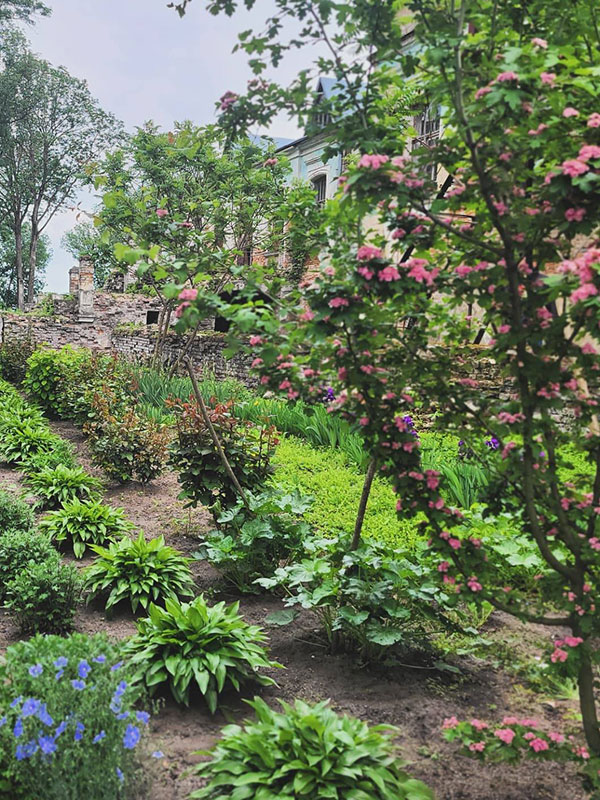
The park as the core resource for a “green” visit
Sources emphasize the presence of a manor park around the palace.
For a green-tourism audience, the park is the main “stay platform”: observation, quiet walking, seasonal photography. Source:
travels.in.ua.
Eco protocol
- Walk on existing paths/tracks; do not drive onto green areas.
- Zero waste: take all trash with you.
- Quiet mode: no loud music; no damaging/collecting “souvenirs” from the grounds.
Tourist infrastructure
Recommended visit format
On-site route: facade viewing → documenting Neo-Gothic details → entering the park → photo spots/panoramas → wrap-up and responsible-visit rules.
Access and organizational conditions
Access rules may change depending on the building’s condition and local regulations. Before traveling, check current information via local announcements/organizers.
Context reference: Suspilne Vinnytsia.
Time on site
Estimated duration: 60–120 minutes (architectural viewing + park walk + photo documentation).
What to bring
- Comfortable shoes for dirt paths/grassy areas.
- Water, a light snack, a trash bag.
- Insect/tick protection in season, a hat in hot weather.
Expert analysis
Cultural value and visitor interpretation
The site’s value for a green-tourism route lies in combining Neo-Gothic manor architecture (rare for Podillia) with a park setting.
This format allows visitors to “read” history through the layers of additions while staying within a nature-first visit scenario (walking, observing, photographing).
Context sources: travels.in.ua,
Ukrinform.
Comparison table with other regional estates
| Site | Period/dates (general) | Style (general) | Key highlight for visitors | Visit format |
|---|---|---|---|---|
| Bakhmetiev–Sheremetev Palace (Tymanivka) | Early 19th c.; additions in the early 20th c. | Neo-Gothic + later layers | Neo-Gothic (rare for Podillia) + manor park | Facade viewing + park + detail photography |
| Count Ksido Palace (Khmilnyk) | 1911–1915 | Neoclassicism with historic motifs | Contrasting facades; photogenic angles | Short viewing + photos + walk around |
| Shchenovskyi Palace (Nosykivka) | Late 19th c. (1886 appears in sources) | Manor architecture/Historicism | Tower, entry group, hilltop park | Viewing + park + detail photos |
| Potocki Palace (Tulchyn) | Second half of the 18th century | Classicism | Ensemble scale and ceremonial composition | Longer route + guided narrative |
| Mering Palace (Stara PryLuka) | Late 19th — early 20th c. (per guides) | Historicism/manor architecture | Manor silhouette + park setting | Viewing + photos + walk around the grounds |
FAQ
Where is the Bakhmetiev–Sheremetev Palace located?
In the village of Tymanivka (Vinnytsia Oblast). Reference: travels.in.ua.
Which style do sources cite most often?
Publications describe the palace as Neo-Gothic (with later additions). Sources: Suspilne Vinnytsia, travels.in.ua.
When did construction of the complex begin?
Sources link the start of construction to the early 19th century, with later stages under different owners. Sources: Tulchyn Community, travels.in.ua.
What is the best visit format for green tourism?
Exterior viewing of facades and details + a walk through the manor park + photography with an eco protocol.
Can visitors go inside?
This depends on the current condition and access regime. Plan for exterior viewing; interior access only with official permission/escort.
How much time should I allocate for the site?
About 60–120 minutes (viewing + park + photos).
Sources
- travels.in.ua — reference page (owners’ chronology, park description, notes on additions)
- Tulchyn Community — construction history and context
- Suspilne Vinnytsia — owners/stages and condition
- Ukrinform — tourism feature about the complex
- Ukraina Incognita — reference notes on the location and related sites
- 20minut.ua — the palace mentioned in a locations overview (context of use/condition)
Video overview
Location on the map