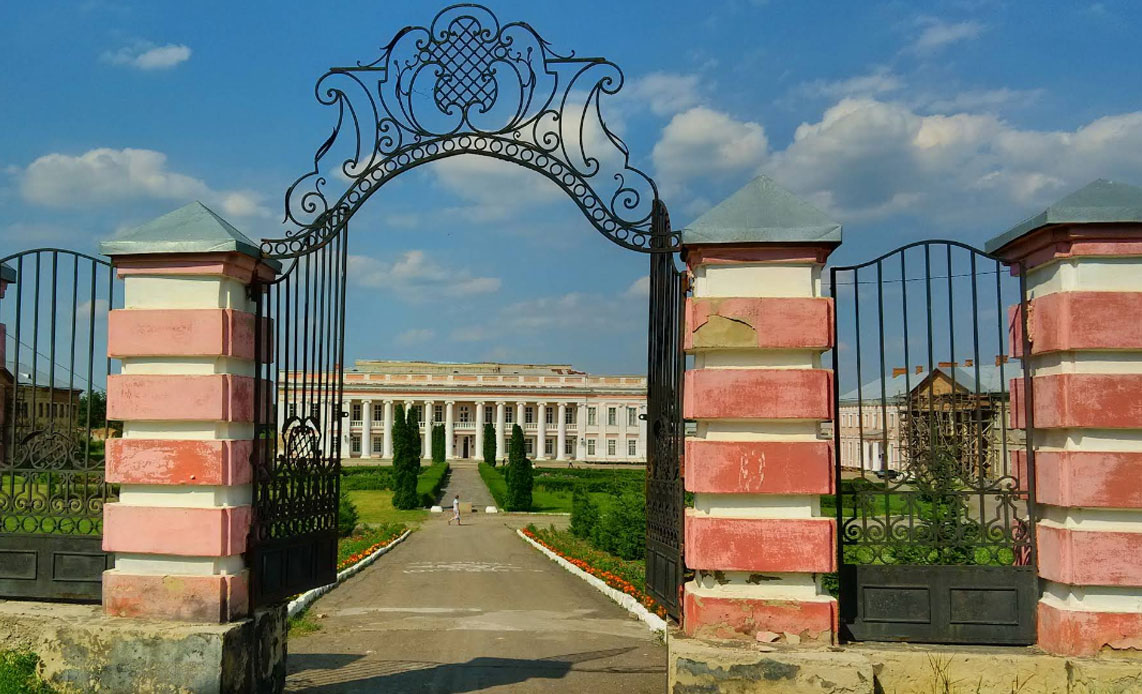
Potocki Palace in Tulchyn is one of the strongest heritage stops in Vinnytsia Oblast for a weekend route built around architecture, local history, and slow travel. This is not a small manor house but a large late eighteenth-century residence whose scale is still legible in the main façade, the side wings, and the broader spatial layout of the ensemble.
For a traveler, the site works on several levels at once. It matters as a classicist landmark, as a Potocki residence that shaped Tulchyn’s historical image, and as a place where cultural memory has not been frozen into a single museum narrative. It remains part of the living urban fabric, which makes the visit feel more layered than a purely decorative stop.
Within a Vinnytsia region itinerary, the palace is especially useful as an anchor point. It can support a focused heritage trip around Tulchyn itself, or it can be combined with other palaces, estate museums, and landscaped sites across Podillia.
Tulchyn
palace ensemble
classicism
Potocki family
historic landscape
cultural heritage
Vinnytsia region
weekend route
slow travel
Object overview
Potocki Palace is a major historic palace complex in Tulchyn, Vinnytsia Oblast. In practical tourism terms, it is one of the clearest architectural reasons to include Tulchyn in a regional route, because the ensemble still communicates the ambition of an aristocratic residence rather than a fragmentary ruin.
The site is best suited to travelers interested in architecture, regional history, photographic stops, and calm urban walks rather than in high-density entertainment. A focused exterior visit usually needs about 45 to 90 minutes. If you pair the palace with other Tulchyn landmarks and a slower walk through town, half a day is more realistic.
This location is worth adding to a Vinnytsia region weekend itinerary. It gives a strong historical narrative, a memorable façade, and enough surrounding context to make the stop feel substantial instead of incidental.
Photo
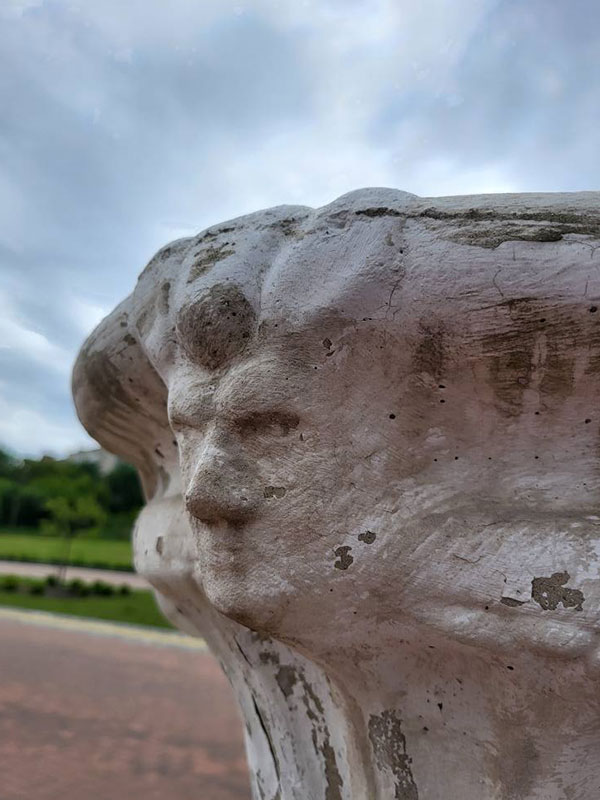
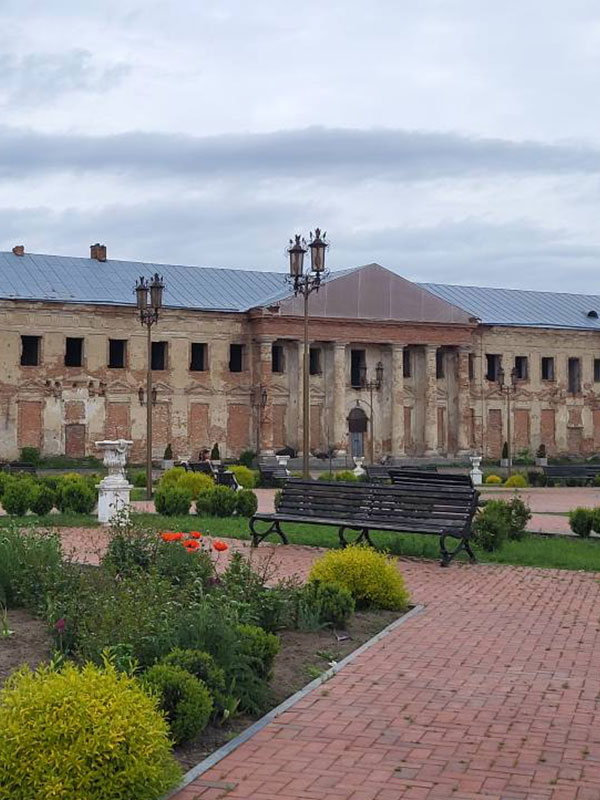
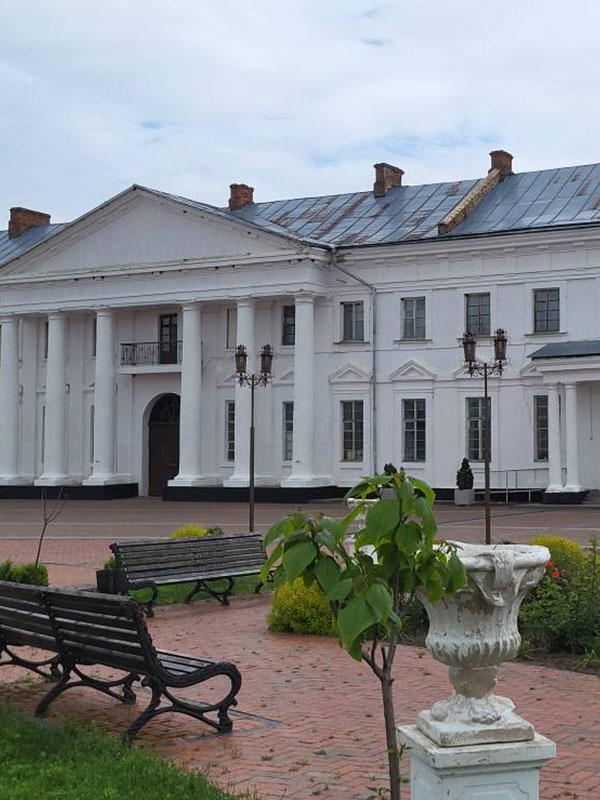
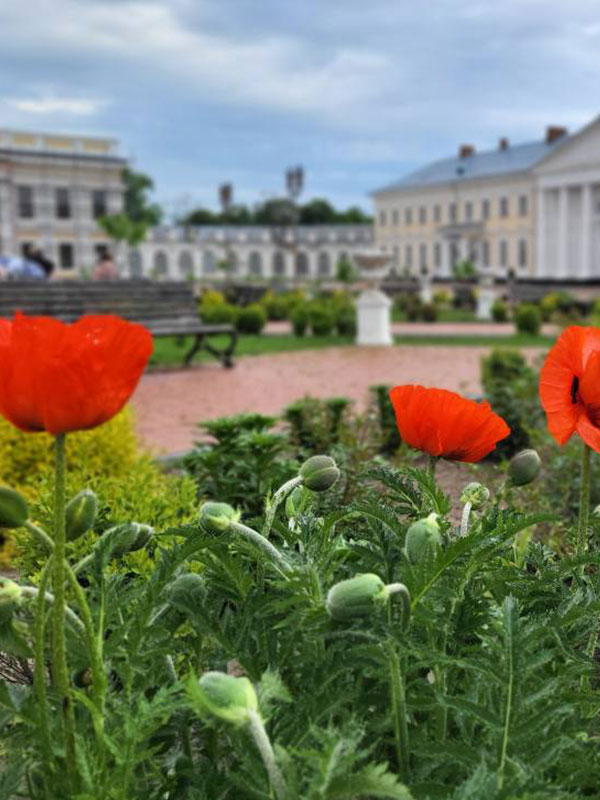
History
Origin of the site
The Tulchyn residence associated with the Potocki family belongs to the late eighteenth-century remaking of the town into a major aristocratic center. Regional materials note that the family first used an older palace built in 1757, while local tourism materials date the principal development of the better-known ensemble to the late eighteenth century and place the main palace phase within the 1775–1782 period. For a travel page, the reliable conclusion is that the landmark reflects the late eighteenth-century rise of Tulchyn as a Potocki residence.
Owners and historical context
The complex is most closely linked with Count Stanisław Szczęsny Potocki. The new palace ensemble was designed by the French architect Joseph Eugène Lacroix. Official local descriptions present the residence not as an isolated house but as a broad aristocratic compound with service buildings, galleries, interiors shaped by imported taste, and a cultural role that extended to theater, collections, and courtly representation.
Later fate and present condition
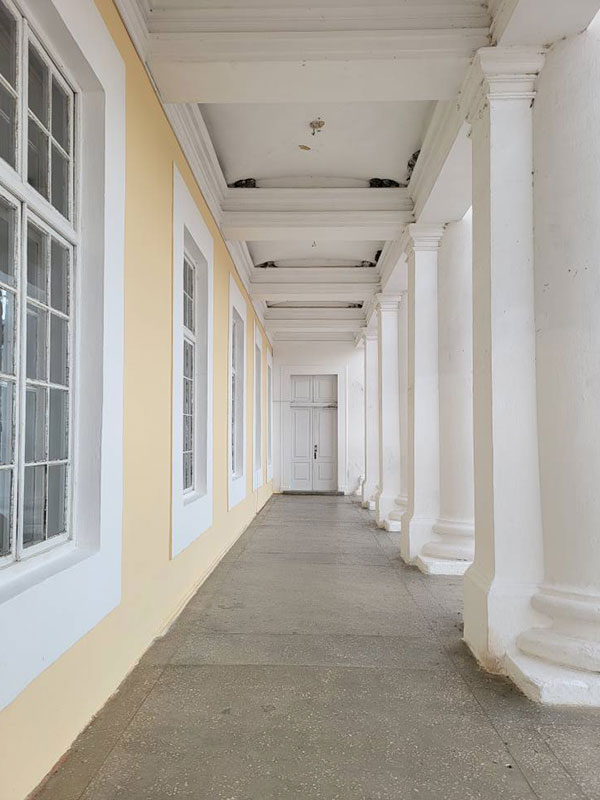
The ensemble did not survive in its full original richness, but the palace still remains the key architectural image of Tulchyn. Today the site is tied to educational and cultural use through Tulchyn Professional College of Culture, and regional authorities have documented restoration works on the roof, façades, terrace, gallery flooring, windows, doors, and interiors without changing the external contours or the constructive scheme of the building.
Architectural features
Planning and composition
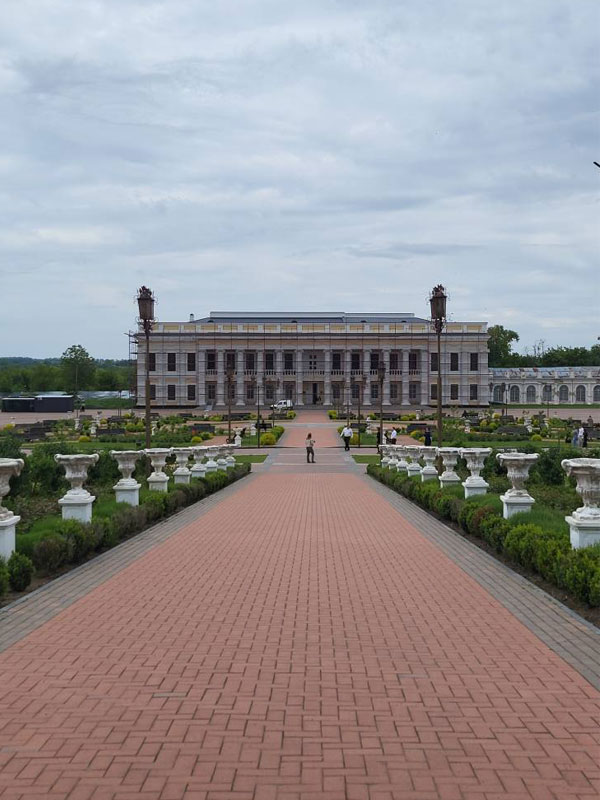
The ensemble is built around a two-storey main palace block with a prominent ten-column colonnade on the principal façade. It is accompanied by two two-storey side corps arranged to the right and left of the main block and linked by semicircular galleries. This composition is what gives the site its ceremonial frontality and makes it readable even during a short visit.
Stylistic features
Potocki Palace belongs to the classicist tradition of the second half of the eighteenth century. The architectural impression depends less on ornament overload and more on symmetry, rhythm, the disciplined façade, and the balance between the central block and the lateral wings. That restraint is one of the reasons the palace remains visually strong in photographs and in person.
State of preservation
This is not a fully re-created ceremonial residence polished into a museum façade. It is better understood as a historically important ensemble with a legible structure, adapted use, and restoration challenges. For a visitor, that means the site still offers real architectural substance, but it should be approached as living heritage rather than as a perfectly restored stage set.
Natural surroundings
Park and landscape
Historical descriptions emphasize that the palace was complemented by the landscaped park known as “Khoroshe.” Local sources describe pines, Italian poplars, fountains, cascades, sculptures, ponds, and a carefully designed water system with sluices. Even if a modern visitor no longer sees the full historical landscape in that form, the palace was clearly conceived as an architecture-and-landscape ensemble rather than as a stand-alone building.
Appeal for walks and photography
The frontal axis toward the main façade works especially well for photography because the composition is symmetrical and easy to read. This is one of those heritage sites where wide shots, central perspective, and slow approach shots all make sense. Morning light and softer late-afternoon light usually help the façade read with more depth.
Importance for green travel
The palace is valuable for green travel not because it functions as a wild nature destination, but because it combines architecture, open space, and an unhurried pace. In regional route design, that makes it stronger than a stop built only around a monument plaque or a single façade view.
Visitor infrastructure
How to get there
For most travelers, Tulchyn works best as a road-trip destination from Vinnytsia or as part of a longer heritage route across southern Vinnytsia Oblast. Once you are in town, the palace is one of the core orientation points and is easy to integrate into a walk through central historical locations.
What to know before a visit
Because the site is connected with current cultural and educational use, it is wise to confirm practical access conditions before a dedicated trip if you need more than an exterior visit. The architectural value is evident from outside, but the exact visitor experience may depend on current activity on the grounds and on any restoration context.
How to combine it with other Vinnytsia region locations
The palace combines well with other Tulchyn landmarks and with a wider palace-and-estate route through the region. In route-building terms, it pairs especially well with Voronovytsia, Nemyriv, and Vinnytsia’s estate museum network, because each stop offers a different scale, function, and preservation model.
Expert analysis
What sets Potocki Palace apart from many regional heritage stops is scale. The visitor does not see only a handsome historic façade but the logic of a major residence: the frontal composition, the wings, the galleries, and the memory of a broader park-and-culture setting. That gives the site more narrative weight than a simple “photo stop.”
Within a cultural route across Vinnytsia Oblast, Tulchyn is one of the strongest anchors for the palace theme. It works for architecture-oriented travel, measured urban exploration, heritage photography, and regional storytelling. If the goal is to understand how large aristocratic complexes shaped Podillian space, this is one of the clearest places to start.
Comparative table with other Vinnytsia region locations
| Location | Settlement / community | Type of site | Historical period | Architectural expressiveness | Natural surroundings | State of preservation | Tourist value for a Vinnytsia region route |
|---|---|---|---|---|---|---|---|
| Potocki Palace | Tulchyn | palace ensemble | late 18th century | large-scale classicist composition with a strong ceremonial façade | historical landscaped context and open frontal grounds | adapted and partly restored, with the main structure clearly legible | one of the key anchor points for a palace-focused heritage route |
| Grokholskyi-Mozhayskyi Palace | Voronovytsia | palace / museum complex | 18th century | classicist residence with a calmer, more intimate reading than Tulchyn | park setting within a museum destination | well adapted for museum use | strong half-day stop for travelers who want a palace plus a defined museum program |
| Palace of Princess Shcherbatova | Nemyriv | palace and park ensemble | late 19th to early 20th century | neo-classical palace with a more later-imperial character | large historic park with a broader dendrological appeal | preserved but functionally adapted | especially valuable for travelers who want to combine architecture with a park walk |
| National Pirogov Estate Museum | Vinnytsia | estate museum | 19th century memorial estate | less ceremonial than Tulchyn, but strong as a coherent memorial complex | landscaped estate setting | preserved museum destination | excellent for broadening a route from aristocratic residences to cultural biography and museum heritage |
FAQ
Where is Potocki Palace located?
Potocki Palace is located in the city of Tulchyn, Vinnytsia Oblast, and it is one of the central historic landmarks of the town.
Why is the palace interesting for travelers?
The site combines large-scale classicist architecture, Potocki family history, a historically important cultural setting, and strong visual appeal for heritage-oriented travel.
When is the best time to visit?
Spring through early autumn is the easiest season for a calm visit, photography, and combining the palace with a longer walk through Tulchyn.
How much time should I plan for the stop?
A focused visit usually needs about 45 to 90 minutes. If you want to include other Tulchyn sites or spend more time photographing the ensemble, plan at least half a day for the town.
Is the palace good for photography?
Yes. The main façade, symmetrical approach, and broad open foreground make it one of the strongest architectural photography stops in the region.
Can it be combined with other places in Vinnytsia Oblast?
Yes. It works especially well in a wider route that also includes Voronovytsia, Nemyriv, and museum-estate locations in and around Vinnytsia.
Sources
- Tulchyn community tourism page: Potocki Palace overview
- Vinnytsia Regional Military Administration: restoration project summary
- Vinnytsia Oblast Council: Potocki Palace heritage page
- Tulchyn community: historical milestones of the Potocki era
- Tulchyn Professional College of Culture: official website
- Voronovytsia Museum of Aviation and Cosmonautics: official visitor page
- Nemyriv City Council: note on the memory of Princess Shcherbatova and the palace
- Vinnytsia Oblast Council: National Pirogov Estate Museum
Video overview
Location on the map