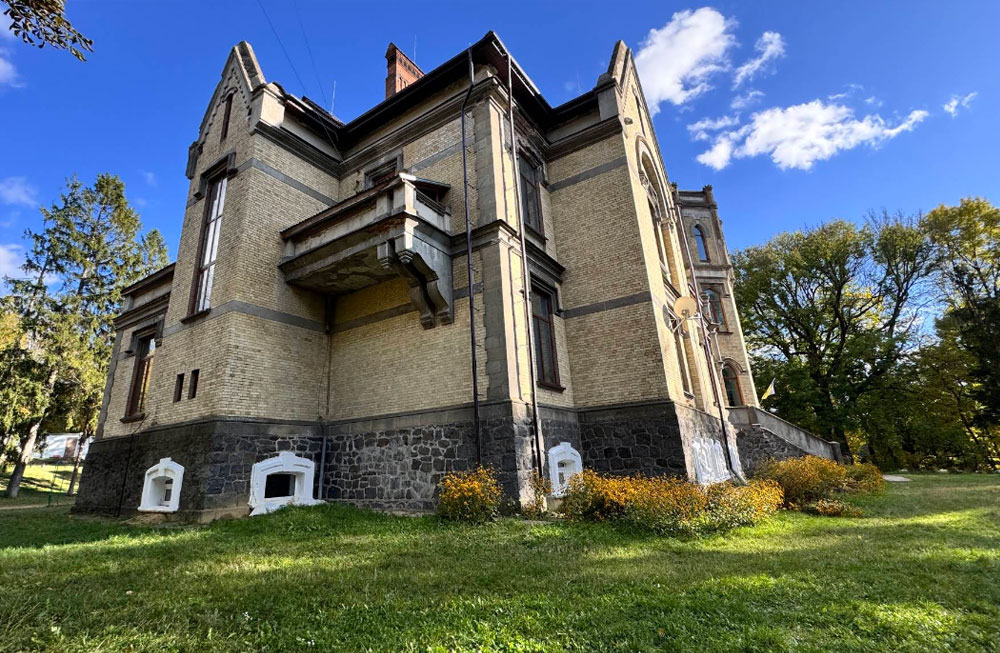
Admiral Chikhachov Estate in Mytky is one of the most distinctive manor sites in the Bar area of Vinnytsia Oblast. It is not a large palace ensemble in the Tulchyn sense, but a compact and memorable hilltop estate whose yellow-brick silhouette still reads clearly in the rural landscape.
For travelers interested in local history, architecture and slow weekend routes across Vinnytsia Oblast, this is a strong stop because the site combines a named historical owner, a preserved manor building, a park setting and an active place in community life. It works especially well for people who prefer quieter heritage locations over heavily commercial destinations.
The estate also has practical route value. It can be visited as a focused detour from Bar or included in a broader one-day heritage itinerary across the former Bar district territory and neighboring parts of modern Zhmerynka district.
Mytky village
Vinnytsia Oblast
Palace-estate
Historic park
Rural heritage
Architecture route
Slow travel
Weekend trip
Object overview
The estate stands in Mytky village, now within Bar urban community in Zhmerynka district, Vinnytsia Oblast. Older tourism and heritage sources often describe the same place through the former Bar district, so both territorial references may appear in published materials.
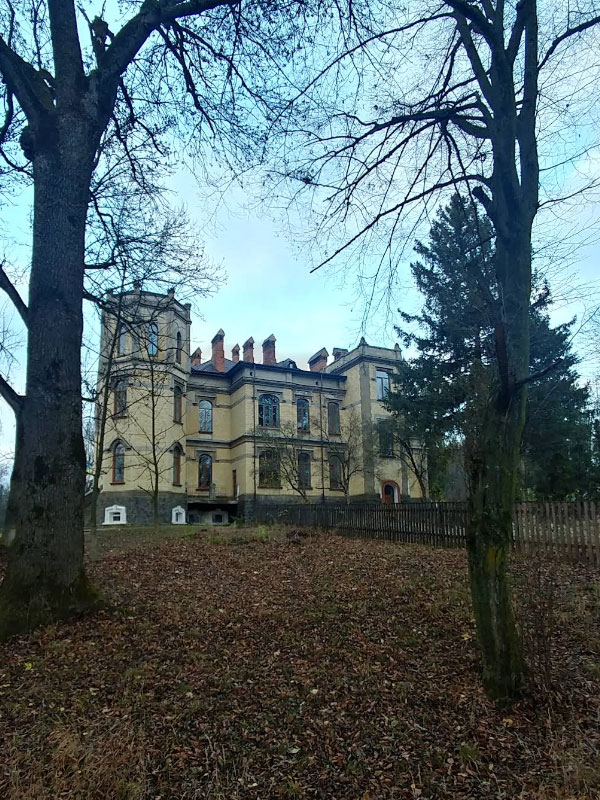
The core attraction is the preserved palace-estate of Admiral Mykola Matviyovych Chikhachov, set on a hill in a historic park. The building is best suited to travelers interested in architecture, regional history, countryside photography and calm heritage routes rather than mass tourism.
For most visitors, 30 to 60 minutes is enough for an exterior-focused stop and a walk around the grounds. If you plan to pair Mytky with Bar and one or two nearby heritage sites, the estate fits very well into a half-day or full-day route across this part of Vinnytsia Oblast.
Photo
History
Origin of the estate
Regional tourism and heritage sources connect the Mytky estate with Admiral Mykola Matviyovych Chikhachov, who acquired the property in the 1860s. The palace itself is generally dated to 1904–1905, when a new yellow-brick manor building was erected on a hill within a historic park of about 10 hectares.
Owners and historical context
Chikhachov was a high-ranking imperial naval and state figure, so the estate reflects more than a private country house: it represents the transfer of metropolitan wealth and taste into Podillia’s rural landscape. Tourism materials also tie the park’s creation to his daughter Sofia, which adds a personal family layer to the site’s history.
Later fate and present condition
The estate avoided total loss because it was adapted to educational use in the twentieth century. Heritage resources record that a school has operated here since 1940, and restoration work is noted for 1992. Today the building remains part of an active educational institution, which means the site is preserved in everyday use rather than frozen as a museum-only object.
Architectural features
Planning and composition
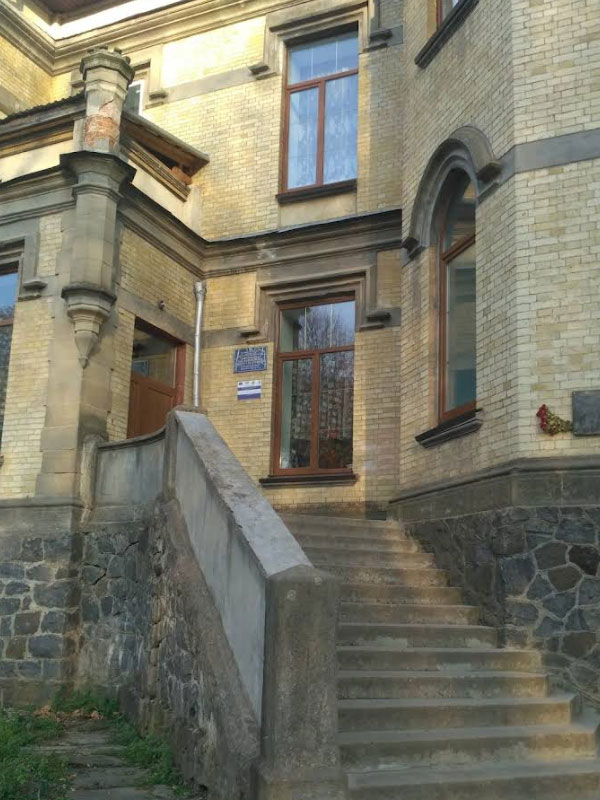
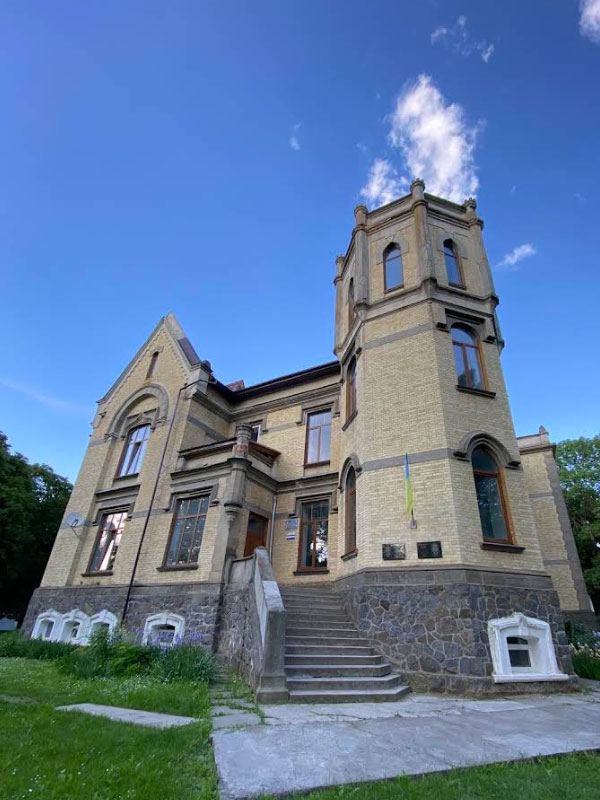
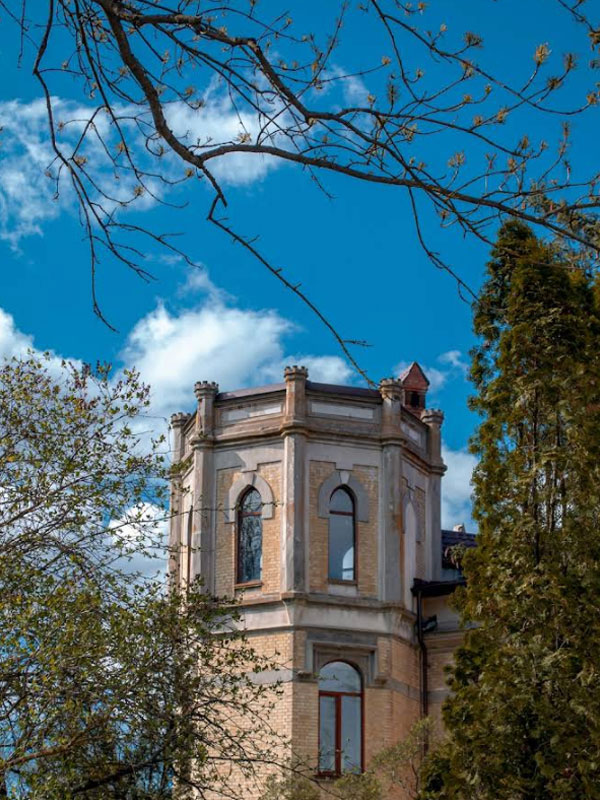
The estate reads as a compact manor with a strong vertical accent. Its tower, high gables, raised approach and hilltop placement create a silhouette that looks more dramatic than the building’s actual scale, which is one reason the site photographs so well.
Style traits
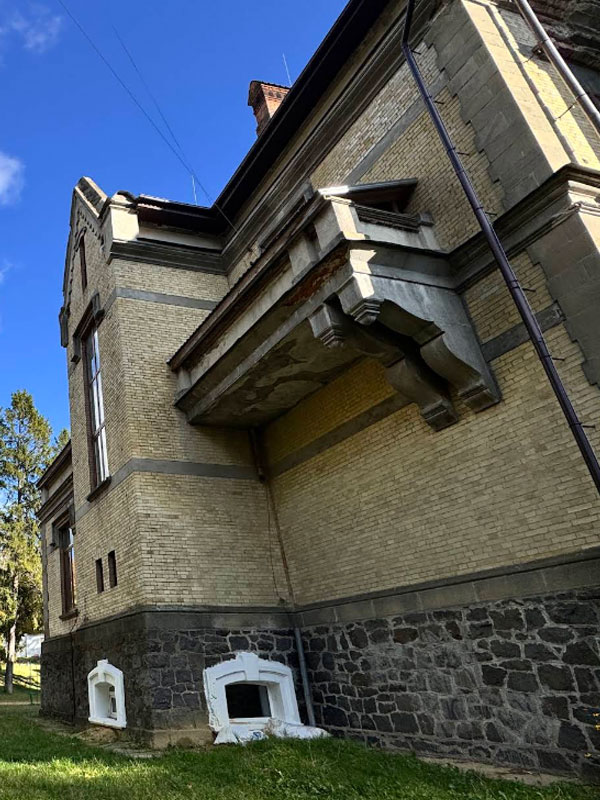
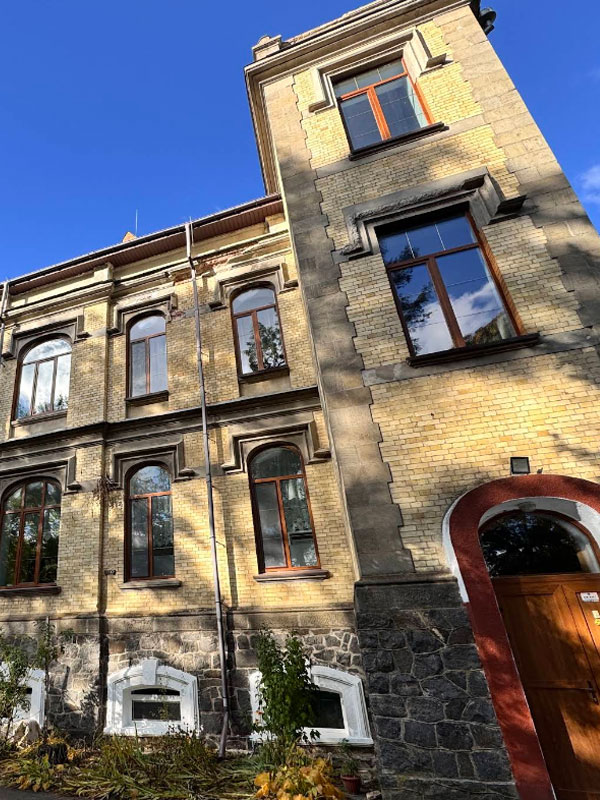
The most secure architectural markers visible on site and described in tourism materials are the yellow facing brick, the picturesque massing and the park-centred estate composition. In local-history and tourism writing the building is often discussed as neo-Gothic or British-influenced in mood, but for a visitor the key takeaway is its castle-like, late-imperial manor character rather than a single uncontested style label.
State of preservation
The estate has retained a legible historic exterior, and local tourism reporting has emphasized that not only the façade but also parts of the interior atmosphere survived adaptation. Continuous use has changed the building’s function, yet it has also protected the structure from the level of ruin that affected many smaller manor sites in the region.
Natural surroundings
Park and landscape
The palace was placed in a historic park setting on elevated ground, and the original landscape concept is an essential part of the estate’s identity. Even when the park is read today through its surviving mature greenery rather than as a fully restored design composition, the link between architecture and site remains clear.
Attractiveness for walks and photography
This is a rewarding stop for exterior photography because the building’s yellow brick, tower element, open lawn and surrounding trees create several clean vantage points. The site works especially well in spring, late summer and early autumn, when the manor silhouette stands out against greener surroundings.
Value for green travel
Mytky fits the logic of green and slow travel: a rural setting, modest pace, a manageable stop length and the feeling of discovering a place that still belongs to local everyday life. It is more about atmosphere, architectural observation and route texture than about a long program of attractions on one fenced ticketed site.
Tourist infrastructure
How to get there
The estate lies in Mytky on the Bar–Kopayhorod direction, roughly 14 kilometres from Bar according to tourism sources. The address used in tourism and education registries is Pryvokzalna Street, 1A. For most travelers a private car is the simplest option, while public-transport planning should be checked locally before departure.
What to know before visiting
Because the building is in active educational use, the safest planning model is an exterior-first visit. Respect the fact that this is not an abandoned ruin and not a fully detached museum complex. Weekday access conditions, interior entry and the possibility of photography around the building are better clarified in advance or handled with on-site courtesy.
How to combine it with other places in Vinnytsia Oblast
Mytky works well together with Bar’s historic core and nearby Bar-area sites, and it can also be linked with larger palace or park destinations elsewhere in the oblast. A practical heritage route may combine the estate with Bar, Cherniatyn or Brailiv, depending on whether you want a compact local loop or a full-day architecture-focused trip.
Expert analysis
Admiral Chikhachov Estate is strongest not as a headline monument of national scale, but as a highly characterful regional stop with a rare combination of preserved form, personal historical attribution and living reuse. It has enough architectural identity to reward a special-interest visit and enough route flexibility to work inside a wider Vinnytsia Oblast itinerary.
Compared with larger palace ensembles in the region, Mytky offers a more intimate experience: less ceremonial grandeur, but more locality and a stronger sense of rural continuity. That makes it especially valuable for cultural routes, photography stops and slow-travel weekends centered on lesser-known heritage rather than only flagship attractions.
Comparative table with other Vinnytsia Oblast locations
| Object | Settlement / community | Location type | Historical period | Architectural expressiveness | Natural surroundings | State of preservation | Tourist value for a Vinnytsia route |
|---|---|---|---|---|---|---|---|
| Admiral Chikhachov Estate | Mytky, Bar urban community | Palace-estate | Late 19th / early 20th century; palace built 1904–1905 | Compact yellow-brick manor with a memorable tower silhouette | Historic park on a hill | Preserved; adapted to educational use | Strong for a Bar-area detour, slow travel and heritage photography |
| Potocki Palace | Tulchyn | Grand palace ensemble | 1782 | Monumental classicist composition on a much larger scale | Historic park ensemble | Major ensemble preserved and actively interpreted for visitors | One of the flagship palace stops in the oblast |
| Witoslawski Palace | Cherniatyn | Palace / estate complex | 19th century | Decorative neo-Gothic character and notable facade details | Adjacent historic park | Preserved; adapted to educational use | Very good for pairing architecture with park-oriented travel |
| Museum of Tchaikovsky and von Meck | Brailiv | Palace-park complex / museum | 1868 | More museum-oriented estate setting with strong cultural association | Park by the Riv River | Preserved; museum use | Excellent for a music-and-heritage itinerary |
FAQ
Where is Admiral Chikhachov Estate located?
The estate is in Mytky village, now within Bar urban community in Zhmerynka district, Vinnytsia Oblast. Older sources often refer to the former Bar district, so both versions can appear in travel materials.
Why is this location interesting for travelers?
The estate combines a named historical owner, a preserved yellow-brick manor, a hilltop park setting and an active role in local community life. It is especially attractive for architecture lovers, local-history readers and slow-travel visitors.
When is the best time to visit?
Spring through autumn is the most rewarding period because the park setting is more legible and the building is easier to appreciate in natural light. Autumn is especially good if you want the contrast between yellow brick and foliage.
How much time should I plan for the stop?
For an exterior-focused visit, 30 to 60 minutes is usually enough. If you combine Mytky with Bar or another heritage site in the region, it fits comfortably into a half-day or full-day route.
Is the estate good for photography?
Yes. The tower, gables, yellow brick and park surroundings make the estate visually strong for exterior photography. It is best treated as a respectful architectural photo stop because the building is in active use.
Can I combine it with other places in Vinnytsia Oblast?
Yes. The most practical combinations are with Bar and other heritage stops in the same direction, or with longer palace-oriented routes that include Cherniatyn, Brailiv or Tulchyn.
Is it worth driving here as a standalone destination?
It can justify a dedicated visit for travelers specifically interested in manor architecture or lesser-known Podillian heritage. For most visitors, however, it works best as part of a broader regional route rather than as a full-day single-object trip.
Sources
- Discover.ua — Chikhachov Palace-Estate in Mytky
- Bar City Council — new tourist routes in the Bar area
- Vinnytsia regional heritage resource — Chikhachov estate (building, park)
- EDBO registry — Mytkivska Gymnasium
- Decentralization portal — composition of Bar territorial community
- Discover.ua — Potocki Palace in Tulchyn
- Discover.ua — Witoslawski Palace in Cherniatyn
- Discover.ua — Museum of Tchaikovsky and von Meck in Brailiv
Video review
Location on the map