Vyshcheolchedaiv
Naftan Kogan
Liadova River
landscape park
sugar factory
Podillian estate architecture
green tourism
Vinnytsia Oblast
cultural heritage
Site Overview
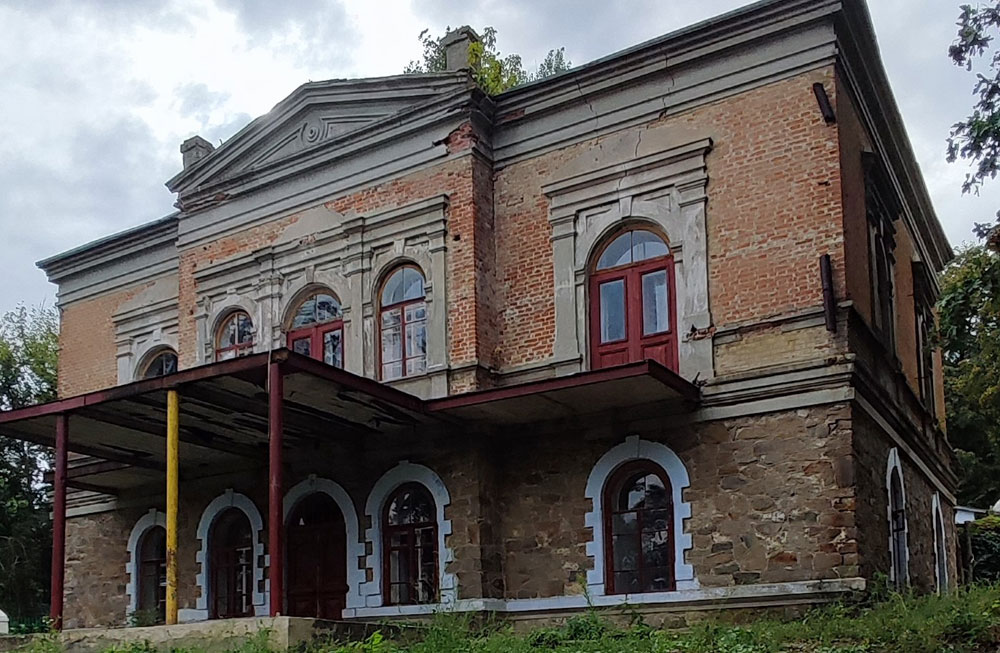
The Naftan Kogan Estate in Vyshcheolchedaiv is a historic estate from the second half of the 19th century associated with the development of local sugar production and the private residence of the factory owner.
The site is located in the village of Vyshcheolchedaiv, Mohyliv-Podilskyi Raion, Vinnytsia Oblast, within the Muravanokurylivtsi community, on the elevated bank of the Liadova River amid an old landscape park.
For green tourism, the site is valuable not only for its architecture but also for its combination of historical setting, river valley, old plantings, and quiet rural landscape, which is suitable for a leisurely route without heavy tourist flow.
The monument is known primarily for its preserved decorative interior elements, which make even the externally restrained building notable in the context of Podillian estates.
In practical terms, this is a location for independent exploration. It is better suited to the format of slow travel, a local history trip, or a themed route of “architecture + nature” than to a classic mass-tourism excursion service.
Photos
History
Early historical context of the locality
Vyshcheolchedaiv belongs to the ancient settlements of Podillia. In public sources, the first mention of the village dates back to 1431, and during the 16th to early 17th centuries it was owned by the Yazlovetsky family.
After the male line of the Yazlovetsky family died out in 1616, the estates were divided. Later, Vyshcheolchedaiv passed to the Churylos, and in the second half of the 17th century to the Dzierżek family, which owned the local lands for about two centuries.
The emergence of sugar production and the estate
In the last third of the 19th century, previous estates were sold at public auction because of debts. It was during this period that the village entered a new economic phase connected with sugar production.
In the second half of the 19th century, a sugar factory was built in Vyshcheolchedaiv. On the opposite bank of the Liadova, in a more representative and scenic location, the estate of its owner, Naftan Kogan, was built.
The estate as a private residence
The residential house of the sugar manufacturer’s family was located within a landscape park. Such a composition corresponds to the logic of a late Podillian estate, where industrial capital was combined with representative residential architecture and a landscaped setting.
For the history of the region, this is an important example of how entrepreneurial families in the second half of the 19th century shaped a new type of local elite residence outside the framework of the old noble model.
The 20th century and the state of preservation
Public descriptions of the site mention that in the modern period the building was used as a kindergarten. Such functional repurposing was typical for many former Podillian estates in the 20th century.
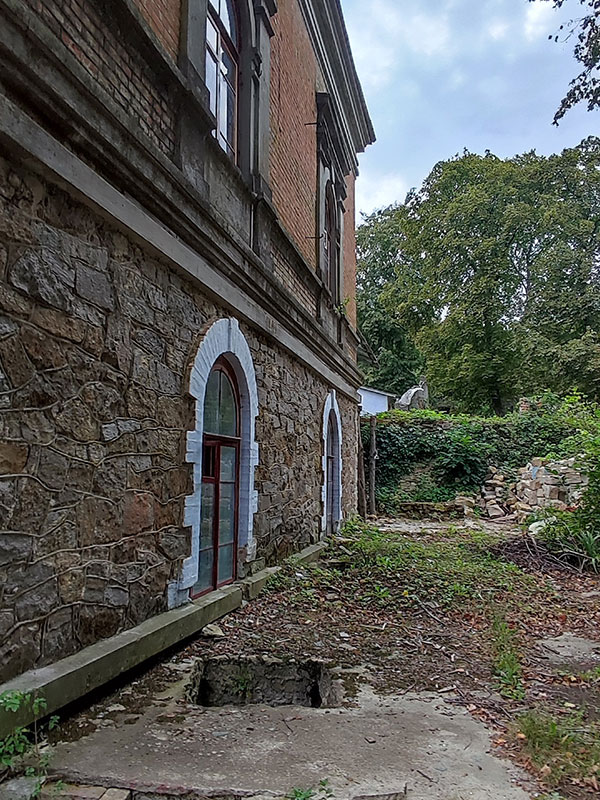
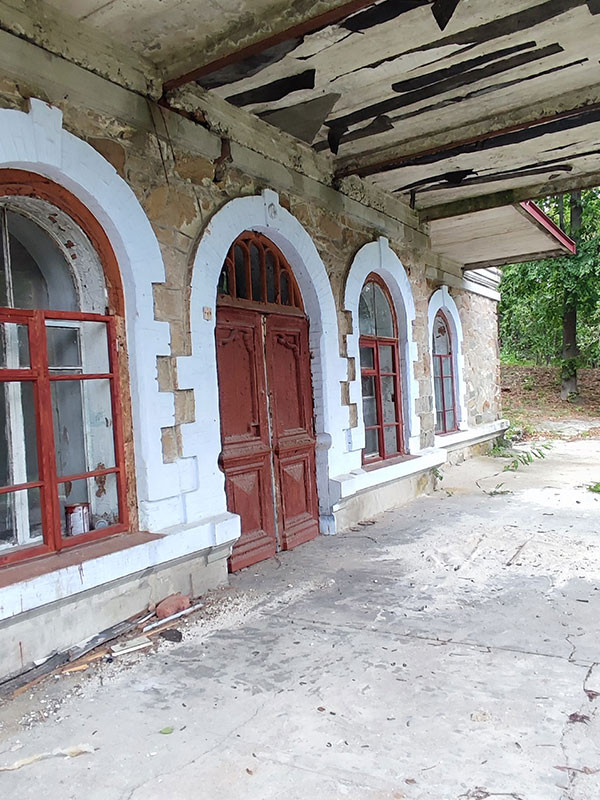
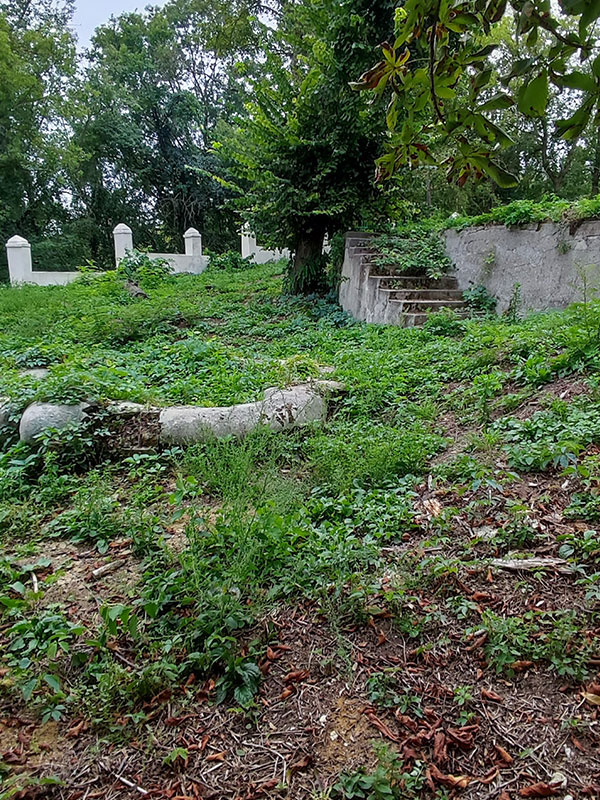
Today, the estate is known as a local architectural and urban planning monument. At the same time, sources emphasize the lack of a fully completed systematic restoration and the gradual loss of some authentic material fabric.
Architectural Features
Building type and composition
The Naftan Kogan Estate belongs to the type of residential estate properties associated with industrial capital of the second half of the 19th century. It is neither a fortified palace nor a large magnate ensemble, but a more камерний, yet culturally significant site.
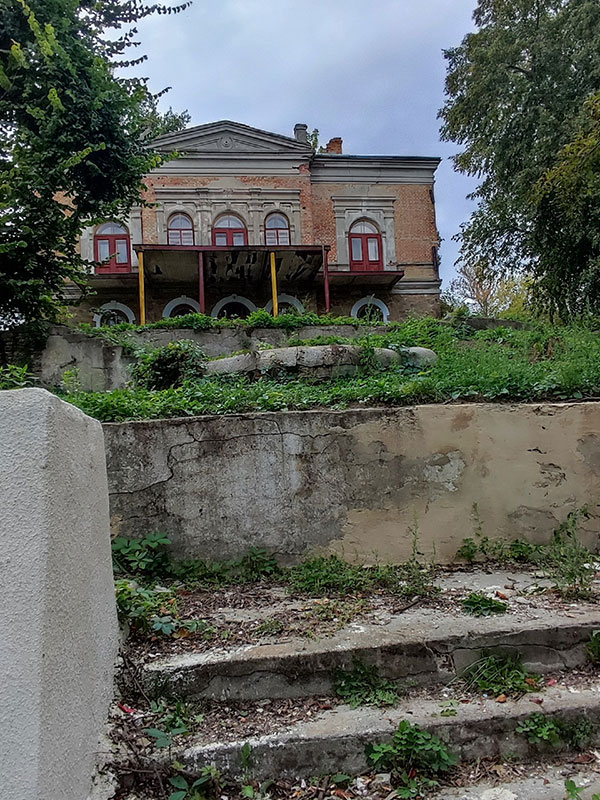
The house is located on a dominant section of the relief. It is precisely its placement on the elevated bank that strengthens its spatial role and explains why the site is perceived not in isolation, but as part of a broader landscape scenario.
Exterior appearance
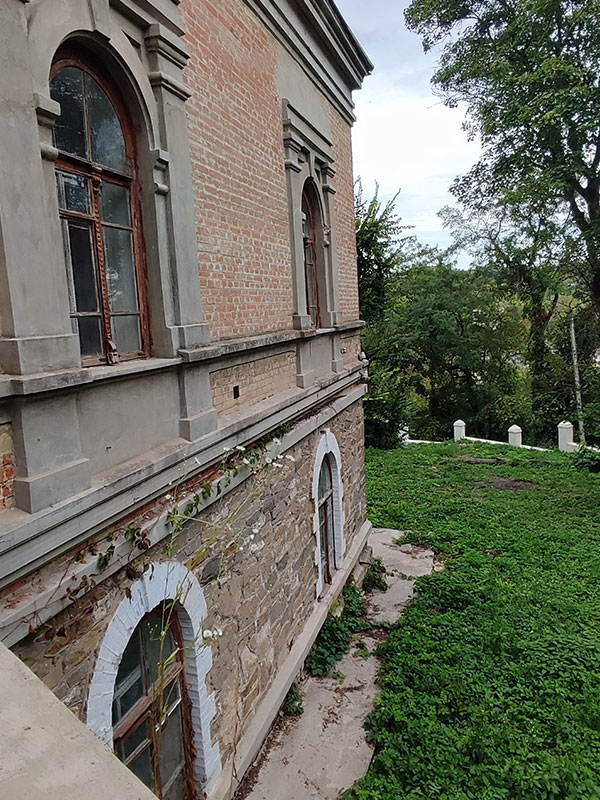
According to public descriptions, the building is not among the most monumental or lavish palaces in Vinnytsia region. Its value lies not so much in the scale of its facades as in the combination of the house with the park and in its interior decoration.
That is why the estate is often evaluated as an architectural gem of the local level: a restrained exterior volume conceals a much more expressive artistic interior space.
Interiors as the main value
The greatest attention of researchers and travelers is attracted by the stucco work, decorative paintings, and carefully designed interiors of the second floor. These elements create the uniqueness of the site within Podillian estate architecture.
For tourism positioning, this is the key argument. If the facade sets the historical context, the interior creates a sense of rarity and explains why the location regularly appears in informal routes through the architectural monuments of Vinnytsia region.
Stylistic features and limits of attribution
Available sources provide grounds to speak of late estate architecture with an emphasis on interior decoration, but without reliably confirmed verification of the exact project authorship or a complete set of stylistic definitions.
Therefore, it is correct to describe the estate as a historic Podillian residence of the second half of the 19th century with artistically valuable interiors and a landscaped setting, without replacing analysis with unverified attribution.
Natural Surroundings
Landscape of the Liadova valley
The estate stands on the elevated bank of the Liadova River. For green tourism, this is fundamentally important because the perception of the site here depends not only on walls and decoration, but also on the relief, quietness, open views, and proximity to water.
The combination of the building with the river valley forms a complete landscape image. In this format, the historic site works as an entry point to a broader natural and cultural environment.
Estate landscape park
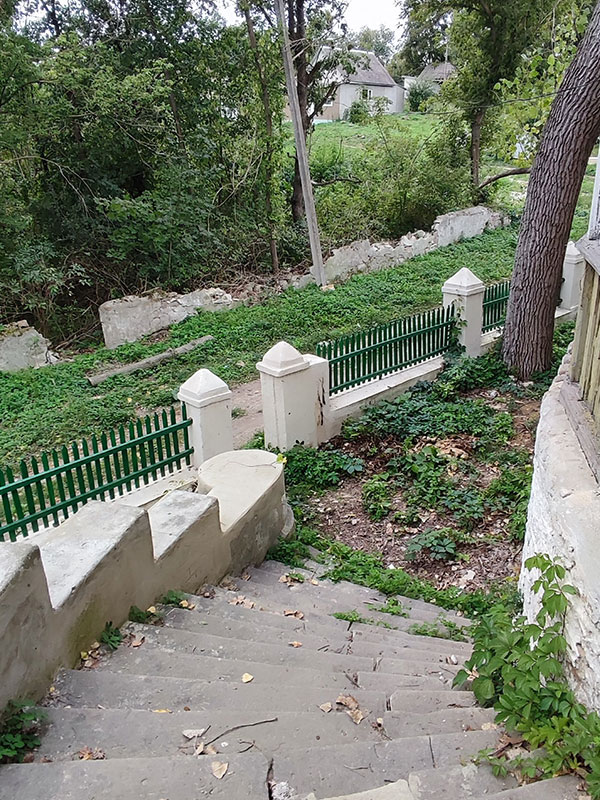
The historic residential house was laid out within a landscape park. Even if the original composition has not fully survived, the very fact of such planning indicates a typical attempt of the era to combine the residence, trees, a promenade space, and scenic viewpoints.
For the modern traveler, this means that a visit to the estate should be structured not as viewing a single wall or facade, but as a route focused on the approach, the terrain, and the surrounding plantings.
Natural sites nearby
Between Vyshcheolchedaiv and Kotiuzhany there is a local geological natural monument called “Upper Proterozoic Sedimentary Rocks (Vyshcheolchedaiv).” It preserves outcrops of ancient sedimentary rocks in the Liadova valley dating back 500–615 million years.
This proximity strengthens the estate’s potential as part of a combined route. A trip can unite architectural heritage, local history, landscape observation, and natural science interest.
Tourist Infrastructure
Transport accessibility
Vyshcheolchedaiv lies within the zone of local transport connections of Vinnytsia region. Regional documents mention the local road Sharhorod—Vyshcheolchedaiv—Konyshchiv, which is an important supporting axis for access to the village.
For the visitor, this means real car accessibility, but not the format of a quick highway trip. The route requires advance time planning, especially in the rainy season or under unstable road conditions.
Services on site
There is no confirmed information in open sources about an active museum regime, a regular ticket office, an official excursion schedule, or developed services directly within the estate building.
Therefore, it is correct to regard the location as a site for independent visits with careful exterior and partial overview observation, rather than as a fully equipped tourist product.
Optimal visit format
The estate works best in the format of a small author-designed route: Kogan Estate, the Liadova valley, the local historic center of the village, sites connected with the sugar-production past, and, if time allows, other architectural monuments of the district.
For green tourists, this is a strong model. It does not require mass service because it relies on quietness, the context of the place, a slow pace, and the readiness to see value not only in a restored shell but also in the historical landscape itself.
Expert Analysis
The Naftan Kogan Estate is important not because of ceremonial scale, but because of the combination of three layers of value: the history of local sugar production, estate architecture of the second half of the 19th century, and the natural frame of the Liadova valley. It is this multi-layered nature that makes the site promising for modern cultural and green tourism.
From the point of view of route design, the location has strong “quiet” appeal. It does not compete with large palace ensembles in scale, but it wins in the niche segment of experienced travelers who seek not only a facade, but also the context of the place, traces of industrial history, and an organic landscape.
The greatest risk for the site is not low recognition, but the slow loss of authentic fabric without completed systematic conservation. That is why it is important for the article not to romanticize ruin, but to present the estate as a monument that requires careful visitation and a professional approach to preservation.
Comparative Table with Other Estates of the Region
| Site | Location | Period / date | Architectural focus | Landscape context | Condition / visit format | Value for green tourism |
|---|---|---|---|---|---|---|
| Naftan Kogan Estate | Vyshcheolchedaiv | second half of the 19th century | estate residence with artistically valuable interiors | landscape park, elevated bank of the Liadova | historic site without confirmed full museum service, requires careful viewing | high for slow travel, historical and natural routes, and niche local history tourism |
| Vitoslavskyi-Lvov Palace | Chorniatyn | 19th century, built in several stages | Neo-Gothic facades, arcaded gallery, decorative tower | park and estate surroundings | well-known and recognizable palace site | high for admirers of romantic palace architecture and park walks |
| Sobansky Palace | Mykhailivtsi | 18th–19th centuries | brick palace with an Ionic portico | park, riverside Podillian surroundings | preserved site | high for calm trips focused on classical composition |
| Nemyriv Palace | Nemyriv | 1894–1917 | Classicism, large representative ensemble | park and sanatorium complex | preserved, in use, more institutional format | high for a wide audience, though less intimate for a “quiet” rural route format |
| Komar Palace | Muravani Kurylivtsi | 1805 | Classical palace on the site of a castle | large landscape park | strong ensemble site within the settlement | high for combining park, architecture, and a short weekend trip |
In this comparison, Kogan Estate does not stand out for scale, but it does for its intimacy, expressive interiors, and natural integration into the Liadova valley. This is exactly what makes it a strong candidate for themed routes focused on the small estates of Podillia.
FAQ
Where is the Naftan Kogan Estate located?
The site is located in the village of Vyshcheolchedaiv, Mohyliv-Podilskyi Raion, Vinnytsia Oblast, on the high bank of the Liadova River within the historic core of the former sugar manufacturer’s estate.
Who was Naftan Kogan and why is his name connected with this location?
Naftan Kogan was the owner of the local sugar factory, and the estate in Vyshcheolchedaiv served as his residential residence. For this reason, the site is associated not only with architecture, but also with the history of the village’s industrial development.
What makes the estate different from other estates in Vinnytsia region?
Its main distinction lies not so much in scale as in its artistically valuable interiors, its location within a landscape park, and its combination with the river landscape. This makes the location especially strong for niche cultural and green tourism.
Is the estate a restored tourist site?
Publicly available sources do not confirm a fully completed systematic restoration or a full museum mode. Therefore, when planning a trip, it is better to rely on a careful self-guided visit.
What else is worth seeing near the estate?
In addition to the estate itself, the Liadova valley, the historic environment of the village, sites related to sugar production, and the natural monument “Upper Proterozoic Sedimentary Rocks (Vyshcheolchedaiv)” are worth attention.
Who is this location best suited for?
First of all, it is suitable for those who love slow travel, trips without crowds, Podillian estates, cultural landscapes, field photography, and leisurely routes with a strong local context.
Sources
- Muravanokurylivtsi Settlement Council. Mansion of sugar manufacturer Kogan, village of Vyshcheolchedaiv.
- Ukraina Incognita. Vyshcheolchedaiv. Kogan Palace and the Neo-Gothic sugar factory.
- Architectural and Natural Landmarks of Ukraine. Vyshcheolchedaiv.
- Wikipedia. Vyshcheolchedaiv.
- Wikipedia. Upper Proterozoic Sedimentary Rocks (Vyshcheolchedaiv).
- Vinnytsia Regional State Administration. List of public local roads.
- Wikipedia. Vitoslavskyi-Lvov Palace.
- Wikipedia. Sobansky Palace (Mykhailivtsi).
- Wikipedia. Nemyriv Palace.
- Ukraina Incognita. Muravani Kurylivtsi. Palace, castle, park.
Video overview
Location on the map